
The Steamed Pork Patty My Dad's Made 100,000 Times

Why this recipe

Most steamed pork patty recipes online are tested only a handful of times. My dad used to make this dish multiple times a day, every day, for 60+ years and can make this in his sleep.
I know you'll love it as much as our community does! This recipe has over 576.2K views, 9.2K likes on YouTube.
Also known yuhk béng (肉饼), steamed pork patty is one of the staples of traditional Cantonese home cooking, especially popular in Toisan where my parents grew up.
There are a ton of different variations on this dish that my dad makes for us, and I can assure you that this one is as delicious as any other!
Pairs well with
View all →
Ingredients

On Pickled Mustard
ja choi / zha cai 榨菜, also officially known as hot pickled mustard tuber, originated in Chongqing. It's one of several varieties of pickled mustard plants that are commonly used in Chinese cooking. You can usually find these at most Asian grocery stores, but I've also included a few links to buy them online.
On Selecting Meats
Pick fatty cuts of pork, like pork shoulder butt or pork belly. Lean cuts (like pork loin, pork chop) will turn out too dry and tough.
Finding Asian Ingredients
If you don't live near an Asian market, most or all of what my dad uses in this recipe can be found on Amazon:
- Kadoya Sesame Oil - https://amzn.to/3c7EOTu
- Lee Kum Kee Premium Oyster Sauce
I've also included some other Chinese kitchen essentials, used in many of my dad's other recipes.
- Pearl River Bridge Superior Light Soy Sauce
- Pearl River Bridge Superior Dark Soy Sauce
- Michiu Rice Cooking Wine
- Lao Gan Ma Chili Oil
- Koon Chun Hoisin Sauce
- Shaoxing Cooking Wine
- Bullhead Shacha (BBQ Sauce)
- Dried Orange Peels
- Koon Chun Ground Bean Sauce
- Dried Shiitake Mushrooms (soak for 15-20 minutes in warm water before slicing)
- Dried Wood Ear Fungus (a few options, depending on what's in stock):
These links are affiliate links, which means that if you use our links to purchase these ingredients, Amazon pays my family a small amount for the sale - at no extra cost to you. If you use these links, we really appreciate the support!
Alternatives to Oyster Sauce
If you're vegetarian or need to stay away from gluten, we have three alternatives for you!
Vegetarian Oyster Sauce
Since oyster sauce is made out of oyster extract, here are some alternatives that have a similar taste without using the actual oyster:
- Wan Ja Shan Vegetarian Mushroom Oyster Sauce
- Lee Kum Kee Vegetarian Stir Fry Sauce
- Lee Kum Kee also sells a bigger container of this
Gluten Free Oyster Sauce
Wok Mei has a gluten-free oyster sauce, but it still contains oyster extract, so it's not vegetarian friendly.
Vegetarian + Gluten Free Oyster Sauce
Unfortunately, we don't know of a vendor that sells an oyster sauce that caters to both dietary restrictions, so you'll need to DIY the sauce.
Mix equal parts gluten free soy sauce and gluten free hoisin sauce. This isn't exactly the same as oyster sauce, but it's pretty close.
Instructions
Prepare pork

We'll first trim the fat off of our pork shoulder (12 oz). Then, we'll cut the pork into strips, slices, and finally, dice them into small bits.
- (An alternative would be pork belly, which is fattier but less healthy. Avoid using leaner cuts, like pork chop or loin.)
Rinse the diced pork in a bowl of water, and lightly massage it.
- In Cantonese cooking, it's fairly common to rinse the redness out of pork. You can see my dad repeat this technique in dishes like Steamed Spare Ribs, Siu Mai, and others. The traditional belief is that this leads to a better taste and appearance.
We'll drain the pork into a colander, and let the pork passively continue draining while we move on to chopping our vegetables. After we're done chopping the veggies, firmly squeeze the pork against the colander to extract some the extra water.

Chop vegetables
We'll be preparing a few different vegetables:
- pickled mustard (1.5 oz) - cut into small strips
- water chestnut (4 oz) - use the blunt edge of a knife or a spatula to crush the chestnut into bits. Dicing leads to a harder texture that we don't want.
- green onion (2 piece) - cut the green onion into small pieces, separating the whites from the greens. The whites will be mixed in with the patty, and the greens will be used as garnish.
The pickled mustard has a salty flavor, so the water chestnuts help balance out the saltiness and give the whole entire patty a nice crunch.
Mix flavors
Before mixing flavors together, don't forget to squeeze the extra water out of the pork!
To the bowl of pork, we'll be adding oyster sauce (1 tbsp), sugar (1 tsp), cornstarch (2 tbsp), sesame oil (1 tsp), chicken bouillon (1 tsp), and white pepper (0.25 tsp).
Create pork patty mixture
With chopsticks, mix the pork and flavors thoroughly for about 1 minute. The pork should start becoming stickier and pastier.
Add the green onion whites, water chestnuts, and pickled mustard, and mix everything together for another 2 minutes.
Oil plate & lay patty
Add oil (0.50 tsp) to a plate, and spread it around the surface. This helps prevent the pork patty from sticking.
Add oil (0.50 tsp) to the pork mixture, and mix it around.
Pour the pork mixture onto the plate, and flatten the pork patty with a spoon. Add a bit more oil to the top and spread it around for an extra glisten.
Boil water & steam patty
We'll set the stove to high heat and start boiling water in a wok. Set a steamer rack on the bottom of the wok. The water level should be just above the top of the steamer rack / just touching the bottom of the dish.
Once the water is boiling, we'll carefully set the plate inside of the wok. Cover the wok and steam for 15 minutes. (If you're using a metal plate, subtract 2-3 minutes).
Plate & garnish
Once the 15 minutes are up, we'll carefully remove the plate from the wok. Garnish with the green onions from earlier.
Call your loved ones over! Time to eat!
Made with love ❤️
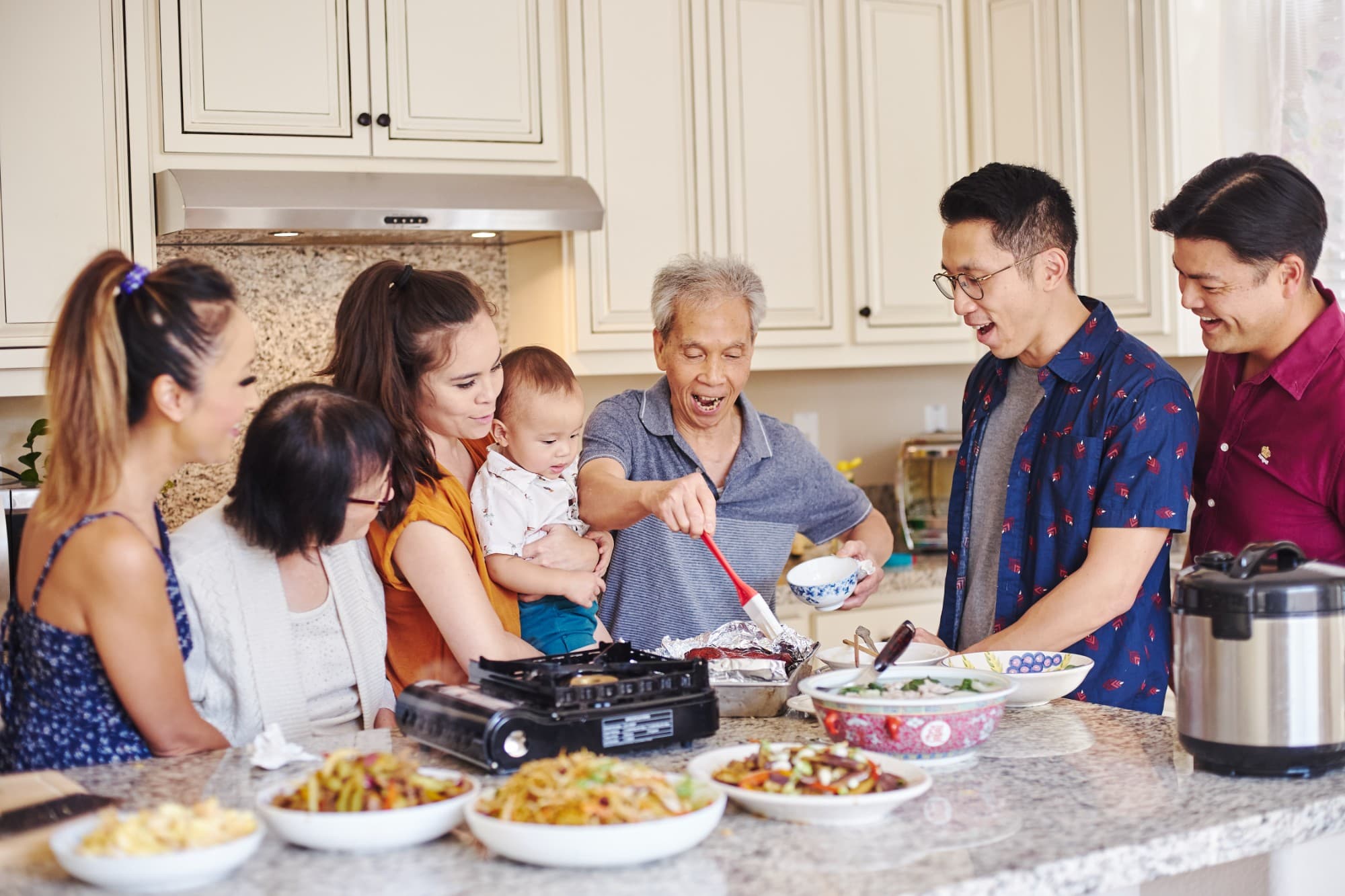
We started Made With Lau to celebrate Cantonese culture and honor the legacy of our wonderful parents, Jenny and Chung Sun Lau.
Our hope is that these recipes and stories help you spread the joy, love, and nostalgia that I felt growing up.
