Chicken Chow Mein

Everything you need to know to master Chinese takeout chow mein noodles!

Cooking Summary
Ingredients: (detailed list)
- Main Ingredients: thick chow mein noodles, red onion, carrot, cabbage, green onion, bean sprouts, chicken thigh, corn oil
- Chicken Marinade: oyster sauce, cornstarch, water, white pepper
- Sauce: oyster sauce, light soy sauce, dark soy sauce, sugar, chicken bouillon powder, sesame oil
Jump To Section
Top 3 Mistakes
- Starting with cold steam:
Bring the steaming water to the state specified before adding the dish. Starting too early changes the cooking time, so establish the steam before you begin counting minutes.
- Starting with a cool pan:
Heat the wok or pan as directed before adding the ingredients. Starting before it is ready changes the initial cooking stage and makes the intended browning harder to achieve.
- Leaving noodles waterlogged:
Drain the noodles thoroughly after their water step. Carrying extra liquid into the wok changes the sauce and makes it harder to get the finished texture the recipe describes.
Overview
This is your ultimate guide to cooking the chow mein of your dreams! Use this recipe as a base. Then, adapt the protein and vegetables to whatever is available to you. Let us know where your creativity takes you!
In the recipe, we branch off the instructions a bit near the end to accommodate your equipment. If your cookware slopes down like a traditional wok shape, where the liquid of the ingredients would collect in the bottom, we recommend cooking the chicken and the vegetables separately.
If you're cooking on a flatter piece of cookware, which gives the liquid of the ingredients a better chance of evaporating quickly, you can cook the chicken and vegetables together.
Thank you, Kikkoman!
This recipe is brought to you in part by Kikkoman. My dad has been using Kikkoman flavors throughout his 50-year career as a chef, and it's a privilege to get to partner with them on such an iconic recipe, Beef Chow Fun with Gravy!
- Kikkoman products are a major flavor enhancer and bring out the “umami” taste, and help balance and round out flavors
- Kikkoman® Less Sodium Soy Sauce is perfect for home cooks who are looking to cut down on their sodium levels, without sacrificing flavor
- Kikkoman offers a wide range of Gluten-Free Asian sauces, including Gluten-Free Oyster Sauce and Gluten-Free Hoisin Sauce
- The KikkomanUSA.com Chinese site offers easy Asian recipes that home cooks can enjoy any night of the week
You can learn more about Kikkoman and follow them on social media here:
- Website: https://www.KikkomanUSA.com
- Facebook: https://www.facebook.com/KikkomanChineseUSA (Kikkoman 萬字在美)
- Instagram: https://www.instagram.com/kikkomanusa_chinese/ (Kikkoman 萬字在美)
Ingredients

Why this recipe
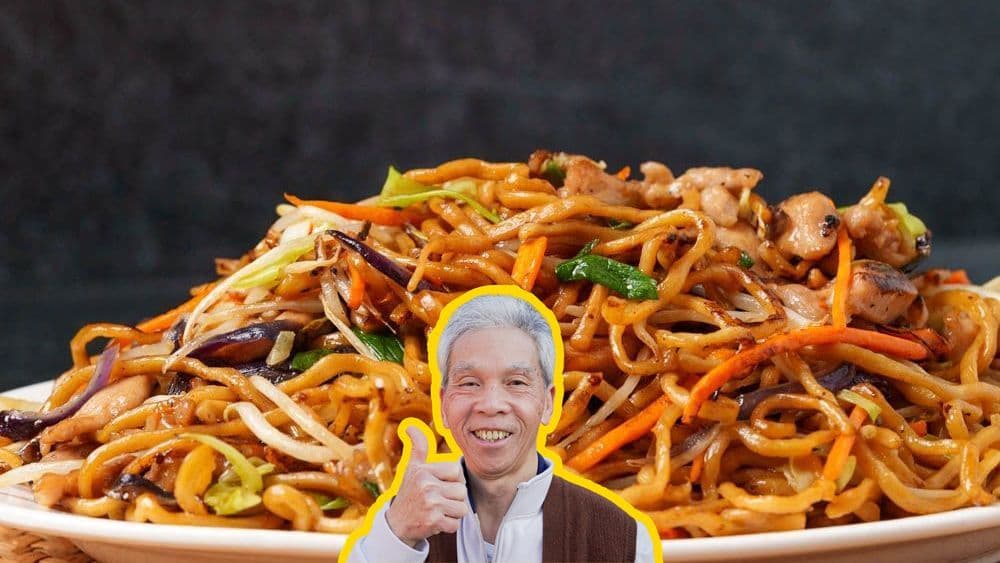
Most chicken chow mein recipes online are tested only a handful of times. My dad used to make this dish multiple times a day, every day, for 60+ years and can make this in his sleep.
I know you'll love it as much as our community does! This recipe has over 3M views, 47K likes on YouTube.
The best vegetables for chow mein
The most ideal vegetables for your chow mein will provide a refreshing crunchy texture to go along with the noodles. They also need to stand up to the intense heat and motion of stir-frying, so avoid leafy greens like bok choy or spinach, which would quickly soften and wilt.
In our recipe, we show you how to make chow mein with the classic carrot and cabbage. Other great options include celery, the harder stalks of some greens, and broccoli.
How to pick noodles for chow mein
If you can get your hands on them, we prefer making this chow mein recipe using thick fresh yellow noodles. If you can’t find those, you can use ramen noodles or dried egg noodles.
In a pinch, you could use pasta, like angel hair or spaghetti, but it’s not ideal for getting that signature aromatic stir-fried noodle texture.
Follow our recipe instructions as written if you are using fresh noodles.
If you use dried noodles, skip the steaming step, and boil the noodles directly. You can follow the instructions on the package of noodles, or adjust the time so the noodles come out with your preferred texture.
How to make Chicken Chow Mein
Prepare veggies
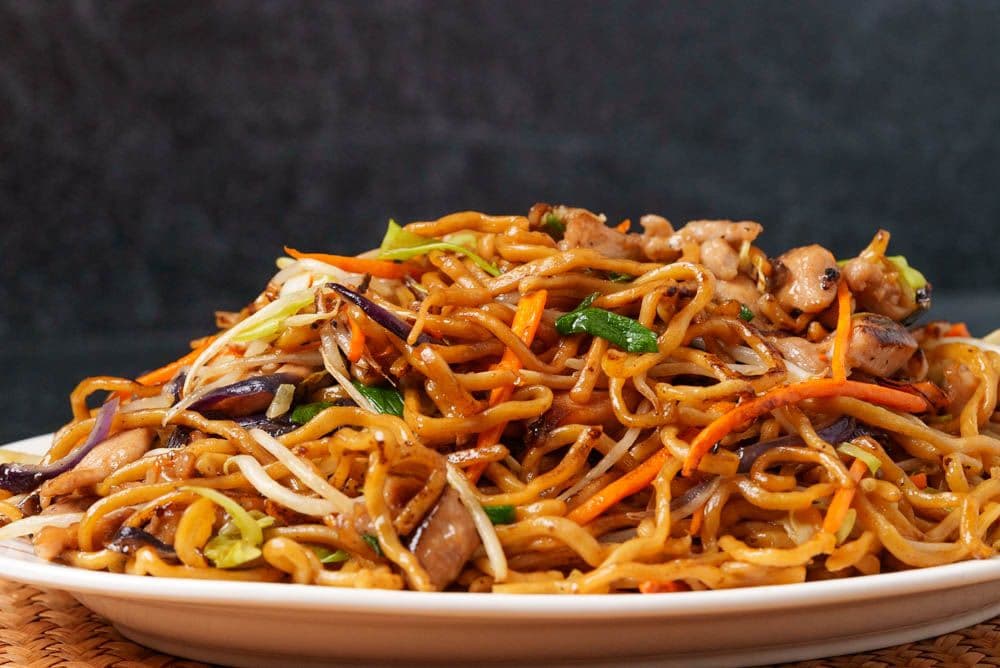
We always like to chop the vegetables before the cutting board is contaminated with raw meat. To harmonize with the long, thin shape of the noodles, we'll be cutting all our vegetables into long, thin strips.
Cut the red onion (2 oz) into strips.
Stabilize the carrot (2 oz) by cutting a thin slice along the side. Put the carrot with that base down, then cut into thin slices. Angle the slices so that they are more oblong than circular. Then, cut the slices into strips.
Cut the cabbage (6 oz) into strips as well, about 1/2-inch thick.
Cut the green onions (1 oz) into 1-inch long pieces.

Prepare chicken
If you have bone-in chicken thighs (12 oz), begin by deboning the meat. To remove the bone, angle your knife towards it and slice down both sides. When the bone is more exposed, pull it up vertically and slice around it to release it from the flesh.
Even out the thickness of the meat by slicing through the thicker parts of the flesh. Then, cut into thin strips, going along with the grain.
Place the strips of chicken into a bowl. To this bowl, add oyster sauce (1 tbsp), cornstarch (3 tsp), water (3 tbsp) and white pepper (0.25 tsp). Mix well so all the seasonings are well-distributed and all of the chicken is well-coated. Set aside to marinate.
Create sauce
In a bowl, combine oyster sauce (2 tbsp), light soy sauce (2 tbsp), dark soy sauce (2 tsp), sugar (1 tsp), and chicken bouillon powder (1 tsp).
Steam & boil noodles
Place a steamer rack in a wok. Add a couple inches of boiling water, but stop before you reach the top of the steaming rack. Turn the heat to high.
Place the chow mein noodles (18 oz) on a plate or a perforated steamer basket. Put it into the wok and cover with the lid.
Once the water is boiling, begin your timer (so if your water is already steaming nicely, start counting right away). Steam for 12-15 minutes with the stove on high heat.
Once the time’s up, take out the noodles, remove the steamer rack, then dump the noodles directly into the boiling water in the wok. Loosen up the noodles and cook for 5-6 minutes on medium-high heat.
If you break apart a strand of noodle and the center has a pale dot, the noodle is not fully cooked through and it needs a bit more time. If there’s no white dot, it’s ready.
Drain the cooked noodles through a colander.
Stir-fry chicken
Add oil (1 tbsp) to the bowl of marinated chicken and mix to distribute. This oil helps the chicken pieces loosen up from one another, reduces sticking in the wok, and contributes to a softer, silkier texture on the surface of the meat itself.
Heat the wok on high. When it just begins to smoke, add oil (2 tbsp) and swirl to coat.
Lower the heat to medium and add the chicken to the wok. Use chopsticks or a spatula to spread the chicken out in the wok so that more surface area can sear. Let the bottom of the chicken pieces sear before stirring. After 30-40 seconds, when the chicken pieces have developed a good sear, they’ll begin to release from the wok on their own.
Increase the heat to high, stirring and separating the chicken pieces with a spatula. Stir-fry the chicken like this for 40-50 seconds until the chicken is nearly or fully cooked through.
Wok cooking: Turn the heat down to medium and transfer the chicken to a clean dish; we’ll bring it back later.
Large frying pan cooking: Turn the heat down. Do not remove the chicken.
Stir-fry veggies
There should be plenty of residual oil left in the wok after stir-frying the chicken, so we won’t need to add any additional oil at this point. Add the red onions and cook until they’re aromatic.
Add the cabbage and stir-fry together for 20-30 seconds.
Add the carrots and stir-fry together for 30 seconds on high heat.
Wok cooking: Remove the vegetables from the wok. You can transfer them into the dish that’s holding the cooked chicken.
Large frying pan cooking: Remove the chicken and the vegetables from the wok, transferring them into a clean dish.
Stir-fry noodles
Add oil (1 tbsp) to the wok or pan.
Add noodles and turn the heat up to high. Use chopsticks to loosen the noodles up and quickly spread them out over the surface of the wok. Don’t stir or mix them up yet; give the noodles time to sear and take on some lovely golden-brown coloring.
After 1 minute of pan-frying the noodles, stir and flip the noodles around so that a new side of the noodles can sear. Pan-fry for another minute so this side can also get golden-brown.
Lower the heat to medium and let the noodles pan-fry for a final 40 seconds. (Last chance for that crispy golden-brown goodness!)
Add sauce
Give the sauce a stir to make sure that it’s still well-combined. Turn the heat to low, and pour the sauce into the wok. Stir until the sauce is well-distributed.
Add everything else & serve
Add the pre-cooked chicken and vegetables back into the wok. Mix and stir-fry all together until well-combined, or for 30 seconds.
Turn the heat up to medium-high and add the bean sprouts. Stir-fry until the bean sprouts (4 oz) are warmed up and mixed into the noodles, or about 1 minute.
For a finishing note of nutty aroma and a glossy shine, drizzle sesame oil (1 tbsp) over the chow mein. Mix and stir-fry on high heat until it’s just distributed, about 1 minute.
Plate and serve. Enjoy!
Pairs well with
View all →
Made with love ❤️
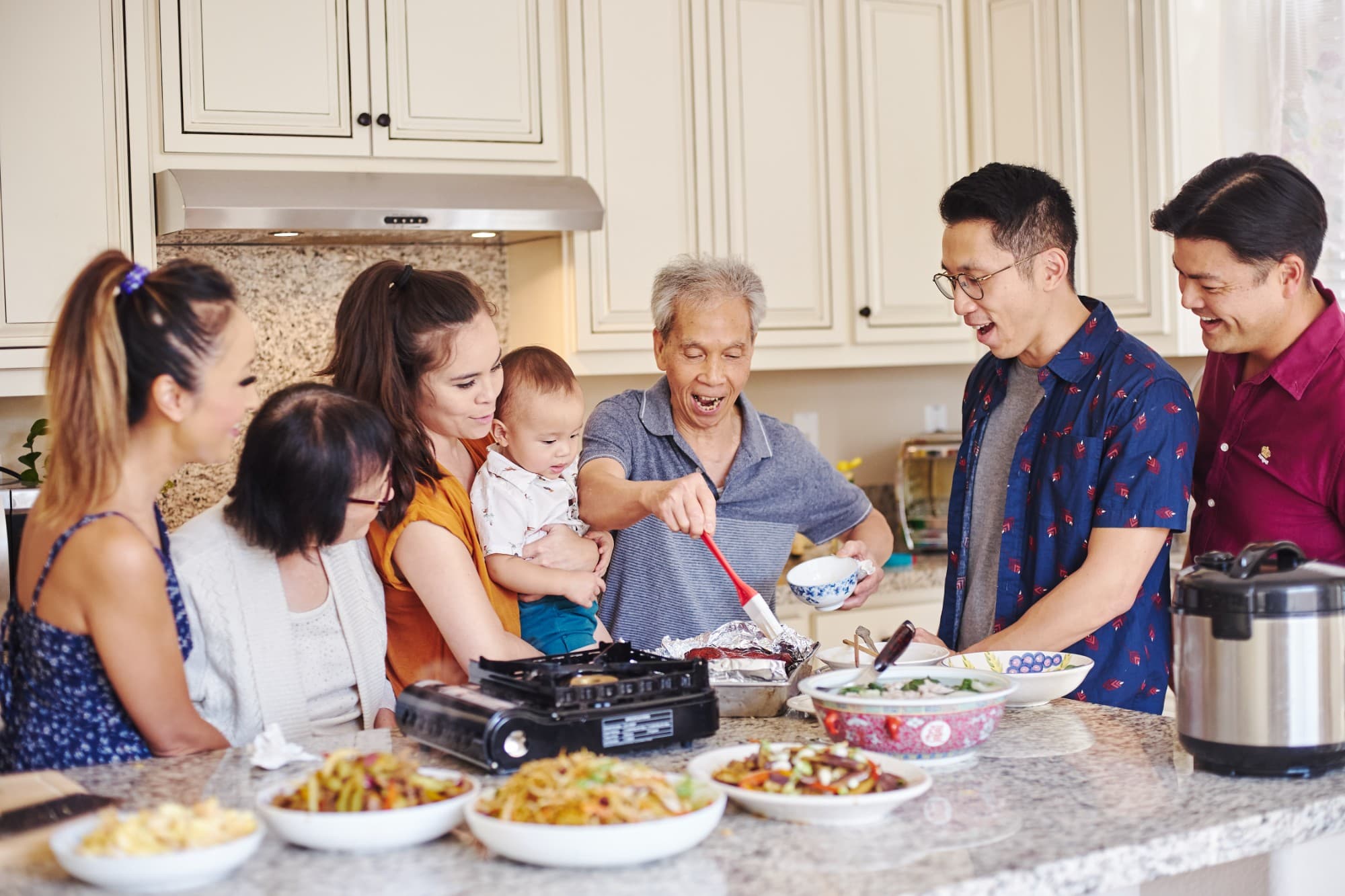
We started Made With Lau to celebrate Cantonese culture and honor the legacy of our wonderful parents, Jenny and Chung Sun Lau.
Our hope is that these recipes and stories help you spread the joy, love, and nostalgia that I felt growing up.
