Lo Mai Fan

A few ingredients make for big flavor in this warming rice dish!

Cooking Summary
Ingredients: (detailed list)
- Main Ingredients: Chinese sausage, cured pork belly, dried shiitake mushroom, dried shrimp, green onion, cilantro, jasmine rice, glutinous rice, garlic, boiling water, oil
- Seasoning: Rice: dark soy sauce, salt
- Seasoning: Stir-fry: light soy sauce, dark soy sauce
Steps:
Jump To Section
Overview
Is it Lo Mai Fan or No Mai Fan?
You might have seen our nifty vocabulary card introducing the name of this dish as... no mai faan?! That doesn't seem right, because all the dim sum cards say "Lo Mai Fan", don't they?
What's going on? Language change! The N being pronounced as an L is what's called Cantonese lazy pronunciation, or lazy sound, 懶音, and it happens to several words. For example, the dictionary will instruct you to pronounce 你 "you" as nei5, but you're much more likely to hear or say lei5. To strict language prescriptivists, it's considered a social language change that "young people these days" do... "these days" being the past 100+ years.
Whichever way you pronounce it, it's the perfect way to warm up on a chilly winter day, or autumn evening, or spring brunch, or in the middle of a summer night peering into the fridge looking for the best leftovers. These ingredients are super shelf-stable, just make it whenever you want!!
Why this recipe

Most lo mai fan recipes online are tested only a handful of times. My dad used to make this dish multiple times a day, every day, for 60+ years and can make this in his sleep.
I know you'll love it as much as our community does! This recipe has over 513.5K views, 9.1K likes on YouTube.
Ingredients
Flavorful dried ingredients
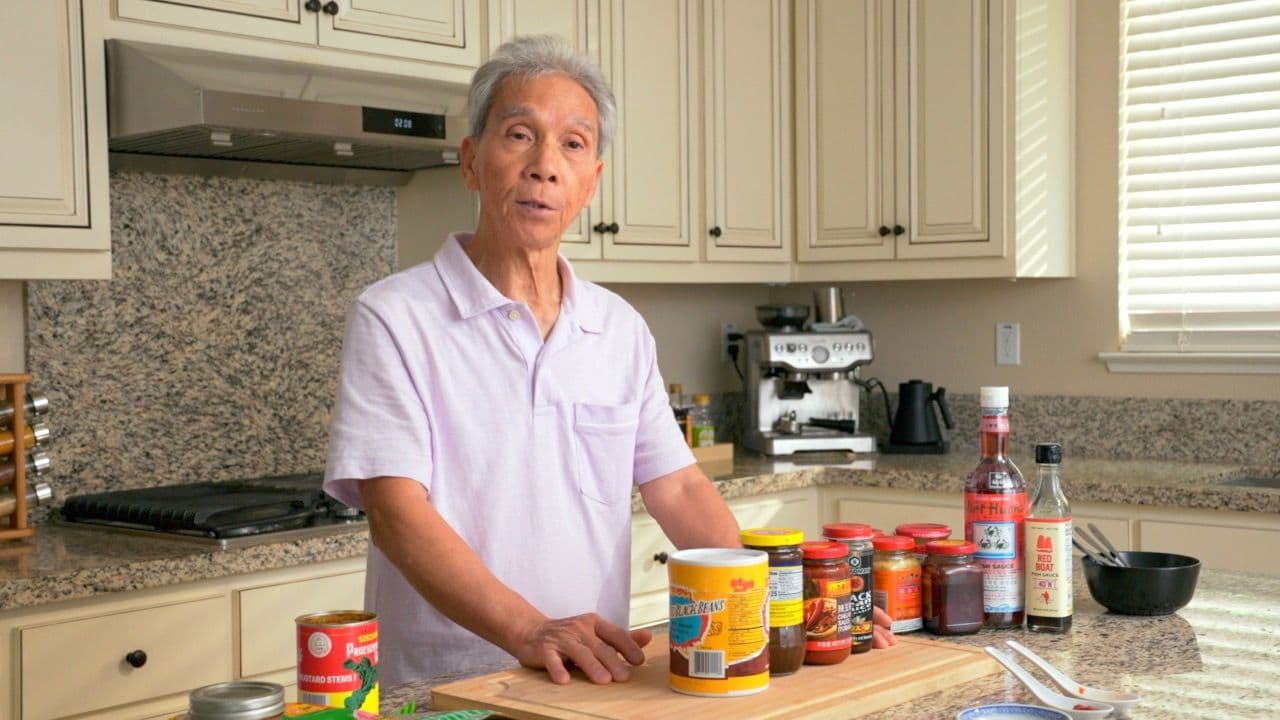
Dried shiitake mushrooms, dried shrimp, and cured meats have very strong flavors, because the ingredients have basically been shrunken down and dehydrated, and their flavors respectively intensified into super concentrate. That's why a relatively small amount of each of these guys can easily flavor such a huge batch of rice.
While Daddy Lau always encourages swapping in and out ingredients that you like and dislike, taking one of these base ingredients out is going to really, really affect how this dish tastes. You can still cook this recipe without one of them, but it wouldn't be this dish.
About Chinese cured meat
My dad uses pork belly that he cured himself. We don't have a recipe for that available right now, so go ahead and buy it at the store for now!
We call this 臘味 sticky rice, 臘味 being cured meats, because two of the star ingredients are cured meats: Chinese sausage, and cured pork belly. In China, curing meats with salt to preserve meats has been practiced for centuries. At first, like most cultures who've also invented curing processes, it was done primarily to preserve excess food for longer and to make food travel-friendly. Today, we continue to cure meat because it tastes incredible!
How to make Lo Mai Fan

Because glutinous rice alone is very soft and squishy, we mix in some jasmine rice for structure, which keeps our final dish from getting overly soft.
Measure out jasmine rice (4 oz) and glutinous rice (20 oz), and wash 3 times, pouring out the starchy water and using fresh water. Let the rinsed rice drain in a colander. The rice will also absorb the remaining surface wetness and become easier to cook through.
Wash the dried shrimp (1 oz) in clean water, and drain. Then, soak the dried shrimp in warm water, which will help them soften up faster than if they were to soak in cold water.
Similarly, wash the dried shiitake mushrooms (1 oz), drain, and then soak in warm water to rehydrate and soften.
Daddy Lau likes to cover the soaking bowl with a plate like a lid, so the heat doesn't escape as quickly and the mushrooms soften even faster.
After 10-15 minutes, they should be soft and ready to cut. Cut them into thin slices, and then dice into small pieces.
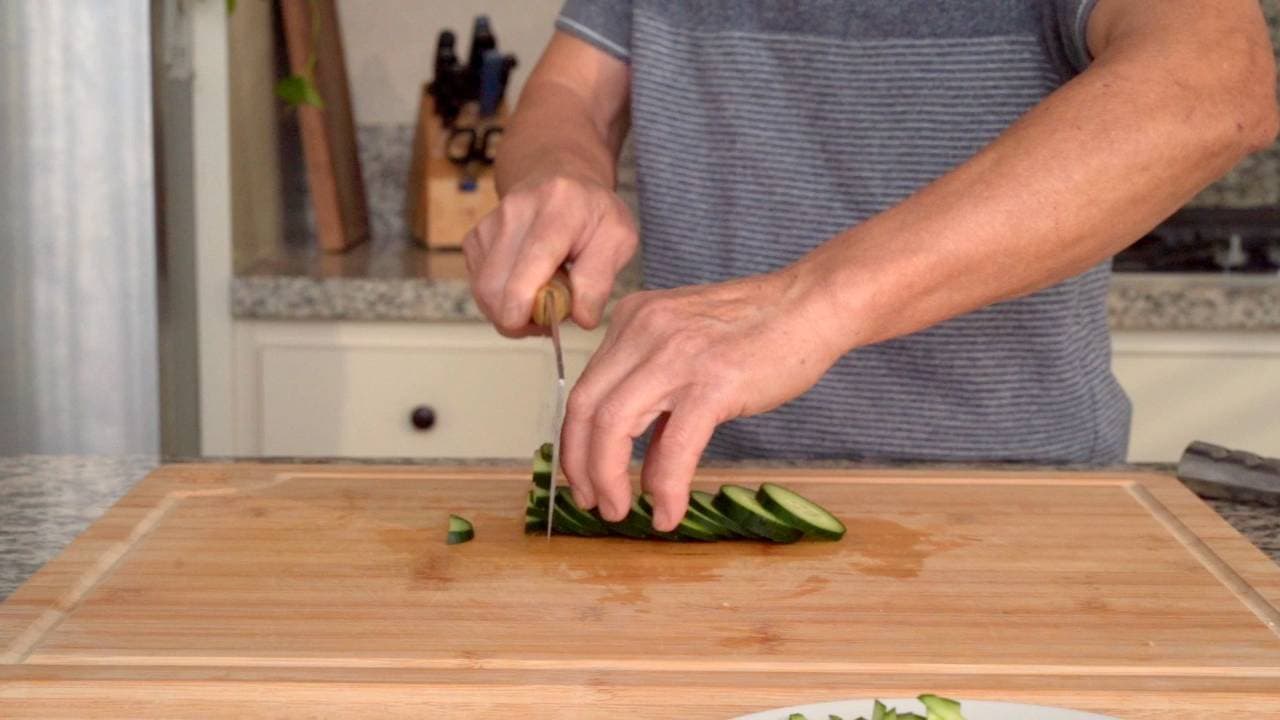
Cured pork belly is very dense, so it's hard to cut through, even with a sharp or heavy knife. Be careful! Make sure that your non-cutting hand is grasping the meat with a claw-like grip, with fingertips tucked under so they don't get bit by a slipping knife.
Cut the cured pork belly (2 oz) into strips, and then dice into small pieces. Make the pieces a similar size and shape to the diced mushrooms.
Chop the Chinese sausage (1 oz) the same way: cut into strips, then diced into small pieces.
Peel garlic (2 cloves). Then, smash and mince them finely.
The cilantro and green onions are for garnish, so use a clean knife and cutting board, or give your knife and cutting board a quick hot rinse.
Chop the cilantro (2 oz) and green onion (2 oz) into small pieces. The cilantro stems and paler part of green onions are more pungent, so make sure those are chopped finely.
We use a rice cooker, but if you're used to cooking rice another method, that's fine too!
Add boiling water (22 oz) to the rice cooker, or whichever cooking vessel you prefer. Using boiling water instead of cold water like we usually do, will cook the rice faster, resulting in a chewier texture with more of a bite, rather than mush.
Add salt (1 tsp) and dark soy sauce (1 tsp) to the water and mix them in. Adding the dark soy sauce now will help the rice cook into a beautifully uniform yellow color.
Then, stir in the rinsed rice, and start cooking (whether it's pushing the on button or turning on the stove).
When the rice is done cooking, it's time to start stir-frying everything together!
Heat your wok or pan on high. When it's hot, or after about 30 seconds, add oil (1 Tbsp), and give it a swirl to coat.
When the oil ripples, or after 40-50 seconds, add garlic. Stir-fry the garlic for 10 seconds, then add the dried shrimp. Starting with the garlic and dried shrimp will really release their aromas and flavor the oil.
Stir-fry for another 10 seconds, then add both the Chinese sausage and the cured pork belly.
Cook for about 30 seconds so that the meats also get aromatic. Add the mushrooms and cook for another minute.
Add light soy sauce (1 tsp) and dark soy sauce (1 tsp). Cook for another 40-50 seconds, and then scoop everything out and onto a plate.
Stir the rice with chopsticks to make sure that the seasoning from earlier is well-mixed. Add oil (1 Tbsp) to the rice and stir it in.
Add more oil (1 Tbsp) to the wok, and then once it's hot, add the rice. Stir-fry until the rice smells very fragrant, or for about 1.5 minutes. Keep moving the rice as it cooks, so it fries evenly.
Give it a taste to see if the flavor needs adjustment. My dad added another tbsp of light soy sauce to his. Cook for another 30 seconds.
Lower the heat and add the stir-fried ingredients from earlier, but reserve a tbsp or 2 to sprinkle on top for beautiful presentation. Use chopsticks to loosen up the rice and mix the ingredients in. The juices from the stir-fried ingredients will moisten the rice and make it easier to mix the small pieces in.
Stir-fry and mix everything for 2.5 minutes, then add the chopped cilantro and green onion. (Again, you can save some for garnish.) Mix everything in and turn off the heat. The chopped cilantro and green onion don't need to be cooked!
Scoop the sticky rice, now speckled throughout with little flavor gems of meat and mushrooms, into the serving dish. If you reserved those stir-fried ingredients and green garnishes, layer on the stir-fried ingredients first, and then sprinkle the green garnishes on top. Enjoy!
Top 3 Mistakes
- Rushing the mushroom soak:
Give the dried mushrooms time to soften before cooking. A quick rinse is not a substitute for rehydration; follow the soaking step so the centers are ready along with the edges.
- Skipping the soaking step:
Rehydrate the dried ingredients before you start cooking. Follow the recipe’s soaking instructions so they soften properly rather than staying tough in the finished dish.
- Skipping the rice rinse:
Rinse the rice as directed before cooking. Removing the surface starch helps control the final texture, so do not skip this preparation and expect the same separate grains.
Frequently Asked Questions
What's the difference between lo mai fan and lo mai gai?
Lo Mai Gai is another popular sticky rice classic. However, Lo Mai Gai has chicken and salted eggs, and is wrapped in lotus leaves and steamed. It's a bit more labor-intensive than this Cantonese Sticky Rice, Lo Mai Fan, recipe.
How do you get the toppings and rice mixed well?
If you use a large spatula or spoon, it may be hard to get the small pieces thoroughly combined with the rice. Using chopsticks will help get those small pieces mixed in.
Also, it's hard to mix the toppings in if the rice is in big, unforgiving chunks. The additional dash of oil mixed into the cooked rice and the juices from the stir-fried ingredients all help moisten and loosen up the rice.
Is this a seasonal dish?
It's a seasonal dish in that it's a warm and comforting, hearty and filling and utterly well-suited for chilly winter nights (and mornings and noons).
In actuality, you can make it and enjoy it year-round! None of the ingredients are seasonal. This is an ultimate dig-into-the-pantry dish.
Can you make this in a rice cooker?
You can do most of it in the rice cooker, but you will need to stir-fry the aromatics, mushrooms, and meats on the stovetop. If you don't want to stir-fry the rice, though, you can mix the stir-fried ingredients into the cooked rice in the rice cooker, just like Daddy Lau's mom used to do.
Does the glutinous rice need to be soaked overnight?
Although a lot of people prefer to soak glutinous rice, anywhere from a few hours to overnight, that's not really necessary. When we drain the rinsed rice in the colander and work on the rest of the ingredients, the rice will be absorbing the surface wetness on each grain, and that'll be enough.
You especially don't need to soak overnight if you're planning to use an Instant Pot or pressure cooker.
Is Cantonese sticky rice, lo mai fan, healthy?
Yes, it is! You can make sure that you make the healthiest version possible by choosing good quality ingredients. Reducing the amount of condiments and seasonings will affect the flavor of the dish, so we don't really recommend doing that. Instead, you can opt for low-sodium versions of soy sauce if necessary, and use high quality cooking oil.
If you'd like to reduce the amount of oil, that's possible too! You can omit the final tbsp of oil used to stir-fry the rice with the stir-fried ingredients, and instead simply mix the stir-fried ingredients directly into the cooked rice. The texture will not be as smooth, and it won't have that stir-fried aroma to it, but this is actually how Daddy Lau's mom used to make it!
Restaurant or instant versions may not be as healthy when they include additives and preservatives, but because you're making the sticky rice from scratch, you have full control over the ingredients.
Pairs well with
View all →

Made with love ❤️
We started Made With Lau to celebrate Cantonese culture and honor the legacy of our wonderful parents, Jenny and Chung Sun Lau.
Our hope is that these recipes and stories help you spread the joy, love, and nostalgia that I felt growing up.