
The Toisanese Glutinous Rice Dumplings My Dad's Made 100,000 Times

Why this recipe

Most toisanese glutinous rice dumplings recipes online are tested only a handful of times. My dad used to make this dish multiple times a day, every day, for 60+ years and can make this in his sleep.
I know you'll love it as much as our community does! This recipe has over 164.2K views, 2.9K likes on YouTube.
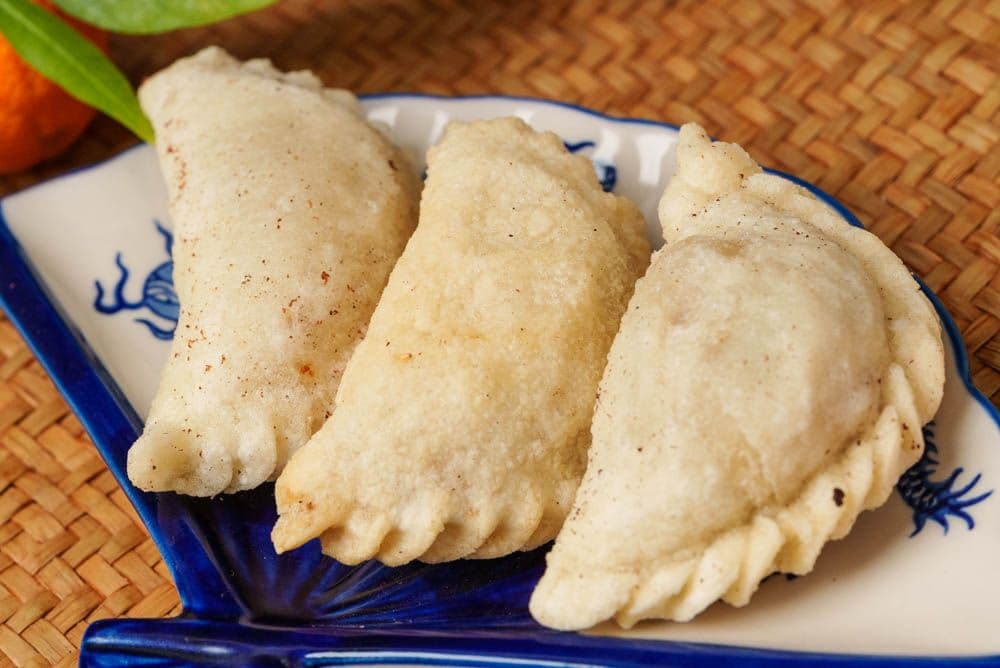
Toisanese Glutinous Rice Dumplings (台山咸水角) is a recipe that we're especially excited to share and preserve. My dad used to help my grandmother make dozens of these every year for Lunar New Year. The holiday simply would not be complete with a big batch of these crispy, chewy, succulent dumplings.
My parents come from Toisan, an area in southwestern Guangdong province. They not only speak a distinct dialect of Cantonese, but also have their own unique cultural practices and cuisine, such as these dumplings and another recipe we've shared: Savory Tong Jyun.
On Toisanese glutinous rice dumplings
In Toisan, these dumplings are called 鹹雞籠, which translates to salty chicken cage. It refers to the Toisanese practice of bringing a live chicken to family celebrations. The shape of the dumpling is reminiscent of the cage that was used to transport poultry and keeps the festive symbolism of sharing the abundance of what's inside.
Pairs well with
View all →
Ingredients

On glutinous rice flour
There are several types of rice flour and two (glutinous rice flour and regular rice flour) are used to make the wrapper of these Toisanese dumplings.
Glutinous rice flour is made by milling sticky rice into a powder. Unlike regular rice, sticky rice has a shorter grain and is missing one of the two main molecular components of starch. This gives the grain its unique sticky texture and makes it easier to break down in hot water.
Glutinous rice flour is the main ingredient in several classic Chinese dishes, such as Tong Jyun and Nian Gao, and used in many other cuisines. It's available at most Asian grocery stores and online.
On jicama
Another difference between these Toisanese rice dumplings and their dim sum counterpart is the use of jicama in the filling. The globe-shaped root vegetable is originally from Mexico, but has made its way into Asian cuisine and occasionally pops up in Chinese stir fries. It has a crunchy texture and slightly nutty, sweet flavor.
Instructions
Prep the dough
Add the glutinous rice flour (10 oz), regular rice flour (2 oz) and salt (0.50 teaspoon) to a large, heat-resistant bowl. For the most accurate measurement, use a digital scale.
Slowly add in the hot water (9 oz) and mix it into the flour using a pair of chopsticks, adjusting for more or less if it’s not the right consistency.
(Chef's Tip: Pour in the water a bit at a time while mixing to prevent clumps.)
Switch to kneading the mixture with your hands until a dough comes together, about 4 minutes. My dad uses once hand to press the dough together and the other to turn the bowl to make sure everything is incorporated. If you need to add more water, mix it in with chopsticks so you don't burn your hands.
Cover with saran wrap to prevent it from drying out and set aside.

Prep the filling
Rinse the dried shrimp (2 oz) with water, agitating them to remove any dirt and debris, then drain. Soak in warm water for 10 to 15 minutes. Drain out the water and mince into small pieces using a rocking motion with your knife.
Cut the dried radish (2 oz) into strips. Rotate 90 degrees to dice into small pieces, then chop at difference angles to mince. Place in a small bowl, add a bit of water and soak for 5 to 10 minutes.
Rinse the Chinese sausage. Cut in half, then slice into strips lengthwise. Rotate 90 degrees and dice into small pieces.
Cut the pork (3 oz) into thin slices. Lay the slices down and cut into strips. Rotate the strips 90 degrees to mince, then chop at different angles to get an even finer cut.
Smash and peel the garlic (3 clove). Cut off hard ends and mince them finely.
Cut the green onions (0.50 oz) in half, line them up, then dice.
Roughly dice the cilantro (0.50 oz).
Using a small sharp knife, cut and peel off the outer skin of the jicama (4 oz). Cut into thin slices. Lay the slices down and cut into strips. Rotate the strips 90 degrees, then dice into small pieces. Chop at different angles to get a finer mince.
Stir fry filling
Heat a wok on high. Add the oil (1 tablespoon) and lower heat to medium. Use a wok spatula to spread the oil around the wok.
Add the garlic and stir fry for 30 to 40 seconds. Next, add the dried shrimp and stir fry for 20 to 30 seconds. Add the Chinese sausage and stir fry for 20 to 30 seconds.
Squeeze out the water from the dried radish, then add to wok and stir fry for 20 to 30 seconds.
Add minced pork and stir fry for 40 to 50 seconds, making sure to break it up into pieces. Turn the heat up to medium.
Add the jicama and stir fry for about 1 minute. Reduce the heat to low.
Add the salt (0.50 teaspoon), sugar (2 teaspoon), oyster sauce (1 tablespoon), light soy sauce (2 teaspoon), white pepper (0.25 teaspoon) and sesame oil (1 teaspoon).
Add the green onions and cilantro and stir fry to mix everything for 1 minute. This also helps cook off some of the moisture.
Taste test and adjust seasoning if needed. Scoop the filling onto a plate and loosen it up to help it cool down.
Fill and wrap dumplings
Remove the resting dough from the plastic wrap. Give the dough a quick knead in the bowl. Sprinkle some glutinous rice flour on a cutting board or clean countertop, then move the dough over on top. Roll it out into a long tube about 1.5-feet long.
Cut dough in half and set aside one piece, covering it with the plastic wrap.
Roll out the first piece of dough to same 1.5-feet length as before. Cut in half and line the pieces up, then slice 4 times into 10 smaller chunks, each measuring about 1-inch wide.
Roll each piece of dough into a ball, then dip one side into some sesame seeds (2 oz). Flatten ball into a bowl shape using your fingers, turning and pressing down repeatedly.
Add 1 to 2 teaspoon of filling into wrapper. Pinch the edges closed. To pleat, use the corner of your thumb and index finger to push in and pinch the dough. This method folds the edge into a pretty lace pattern.
(Mommy Lau's Tip: Pinch the edge of the dough to make the sides even thinner before doing the push in and pinch method.)
Repeat with the rest of the pieces until you've used up all of the dough.
Fry dumplings
Heat a pot or wok on high heat. Add the oil (12 oz) and heat to 320°F (160°C).
Add a batch of dumplings (6 to 7 depending on size of pot), turn off the heat, fry for 3 to 4 minutes, stirring gently.
Turn the heat on to medium, fry for another 2.5 to 3 minutes, flipping the dumplings for an even fry. Maintain a temperature between 266°F to 320°F (130C° to 160°C) with each fry.
Remove dumplings with chopsticks and a spider strainer and set aside to drain.
Repeat steps until all dumplings are fried.
Serve while hot!
Made with love ❤️
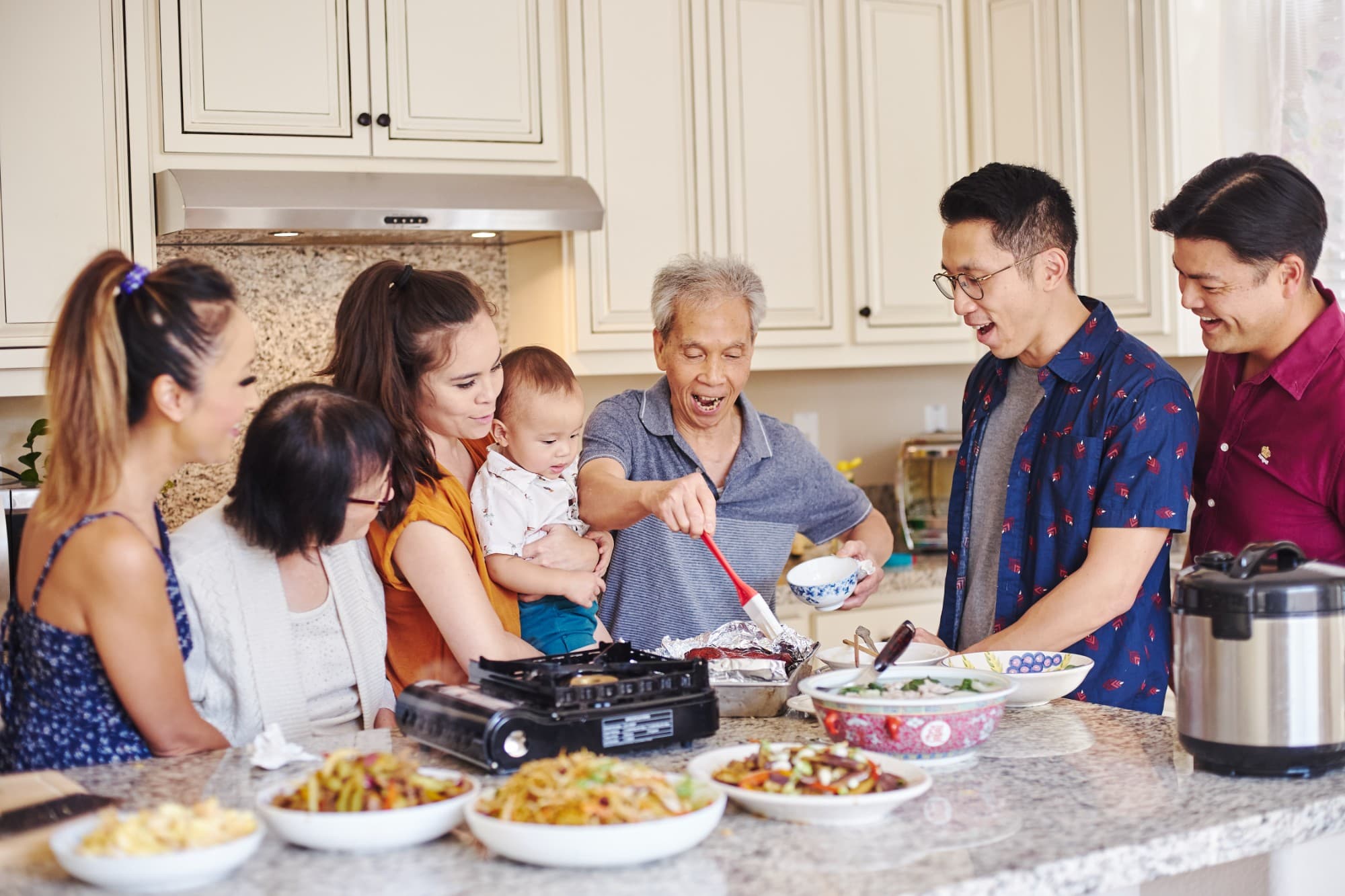
We started Made With Lau to celebrate Cantonese culture and honor the legacy of our wonderful parents, Jenny and Chung Sun Lau.
Our hope is that these recipes and stories help you spread the joy, love, and nostalgia that I felt growing up.
