Salted Eggs

Try out the easiest, most mess-free technique for homemade salted eggs!

Cooking Summary
Ingredients: (detailed list)
- Main Ingredients: eggs, salt, rice wine
- Other Ingredients: water, white vinegar
Jump To Section
Top 3 Mistakes
- Skipping the vinegar soak:
Follow the vinegar-soaking step before coating the eggs. The recipe uses this preparation to soften the shells, rather than putting the salt coating straight onto untreated eggs.
- Leaving gaps in the salt coat:
Roll each prepared egg until the entire shell is coated with salt, then wrap it as directed. Check all sides instead of leaving bare patches hidden underneath the wrapping.
- Forgetting the curing date:
Write the preparation date on the carton before putting the eggs away. This recipe depends on a timed cure, so keep a clear record instead of trying to remember when you started.
Overview
Salted egg yolk has become a popular flavor for all kinds of snacks, like cookies, popcorn, chips and even ice cream.
It may also be familiar as an ingredient for your favorite traditional Chinese dishes, like zung, steamed pork patty, congee, mooncakes, and molten custard buns.
But how far back does its history stretch? So far back that we're not even sure! Historical records reference salted eggs in the fifth century, so clearly, their rich, salty golden goodness has withstood the test of time.
Ingredients

Why this recipe

Most salted eggs recipes online are tested only a handful of times. My dad used to make this dish multiple times a day, every day, for 60+ years and can make this in his sleep.
I know you'll love it as much as our community does! This recipe has over 376.3K views, 7.1K likes on YouTube.
What salt is best for making salted eggs?
We use simple iodized table salt. Feel free to experiment with different salts, like Himalayan pink salt or kosher salt. Don't worry about the size of the grain, as any kind of salt should generally be able to absorb through the shell about the same.
What is the rice wine for?
Because the rice wine is used to help kill bacteria that's on the eggshell, it needs to be at least 40% alcohol by volume, or 80 proof. The higher alcohol content may help weaken the eggshell as well.
The wet layer of rice wine on the eggshell also helps the salt stick.
How to make Salted Eggs
Prepare eggs
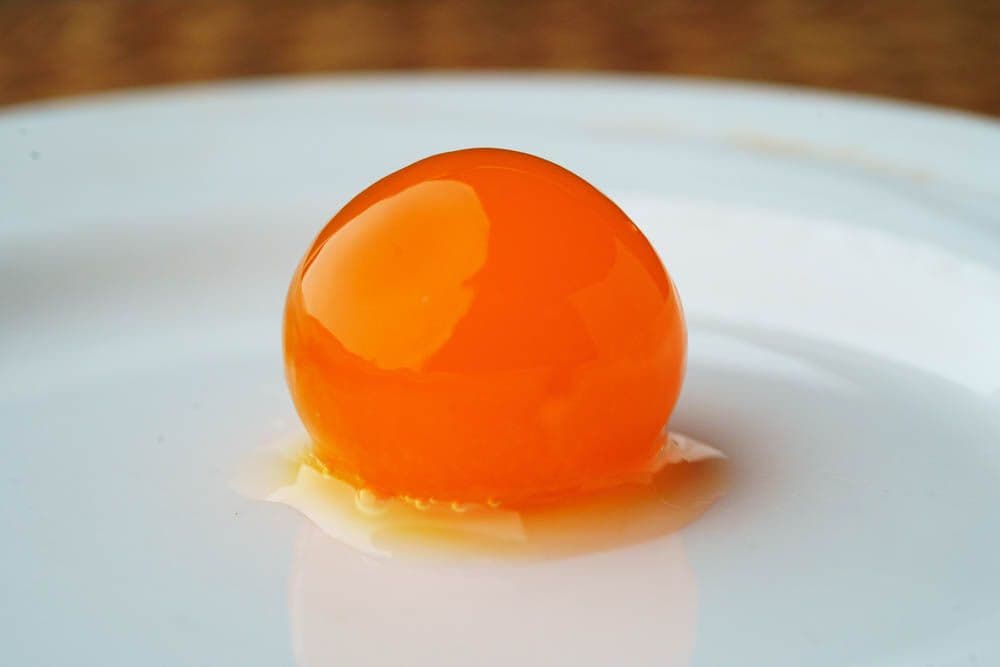
Wash the eggs gently.
Add white vinegar (3 tbsp) to a clean bowl of water (2 cup) and stir it a little to mix the solution. Add more water as needed. There needs to be enough vinegar solution to fully submerge the eggs.
Soak the eggs in the vinegar solution for 30 minutes. This soaking process will soften the eggshell and let the salt penetrate easily.

Prepare curing ingredients
Prepare the salt (3 tbsp) and rice wine (3 tbsp) in separate bowls. The rice wine needs to be at least 40% alcohol to kill any bacteria on the eggs.
Make sure the bowls are large enough that you'll be able to easily roll the eggs around inside.
Cure eggs
Take the eggs out from the vinegar solution and gently dry them.
Dip each egg into the bowl of rice wine, making sure that all of the eggshell surface wet. The wetness of the rice wine will help the salt adhere to the eggshell.
Then, roll the egg into the bowl of salt until it's completely covered in salt.
Finally, wrap the coated egg with a prepared square of plastic wrap. Lay the egg down in the center of the plastic wrap, pull one edge of the plastic wrap over and then roll the egg along the length of the plastic wrap to keep wrapping it. Then, tightly twist the two free ends to seal the egg in.
Put the wrapped eggs back into the egg carton for storage, and write the date on it to keep track of timing. Put the egg carton in a plastic bag. Let it cure in a cool, dark, and dry place for 4 weeks.
Finished salted eggs
Consume after 4 weeks of curing. Don't wait longer than 4 weeks to use them, as the egg yolks will begin to break down.
If you would like to preserve the salted eggs for longer, crack the eggs, remove and freeze the egg yolks. The frozen egg yolks will keep for longer.
Pairs well with
View all →
Made with love ❤️

We started Made With Lau to celebrate Cantonese culture and honor the legacy of our wonderful parents, Jenny and Chung Sun Lau.
Our hope is that these recipes and stories help you spread the joy, love, and nostalgia that I felt growing up.
