
The Potstickers My Dad's Made 100,000 Times

Why this recipe

Most potstickers recipes online are tested only a handful of times. My dad used to make this dish multiple times a day, every day, for 60+ years and can make this in his sleep.
I know you'll love it as much as our community does! This recipe has over 1.1M views, 24K likes on YouTube.
The legend of potstickers!
The word "potsticker" comes from the Chinese word "wotip (鍋貼)", which literally means "pot stick". Generally, wotip refers to pan fried dumplings, and this is just one of the thousands of varieties of dumplings found in cuisines all across the world. Even just in Chinese cuisine, you'll find dumplings with savory or sweet fillings, prepared in all sorts of methods like baking, frying, or steaming.
No one agrees on the exact origin of Chinese potstickers, but by one account, these came about when a chef of the Imperial Court accidentally left dumplings cooking in a wok, burning the bottom and claiming them as his own special creation.
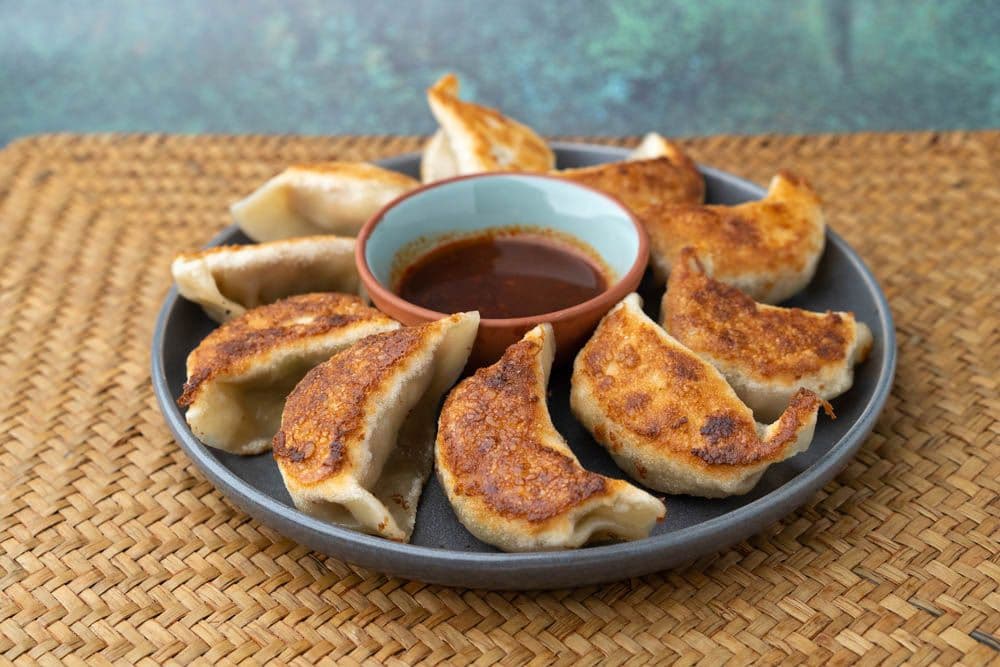
Nowadays, potstickers are enjoyed everywhere, on purpose, for their crispy skin and scrumptious fillings served with a perfectly paired dipping sauce.
Thank you, Kikkoman!
This recipe is brought to you in part by Kikkoman. My dad has been using Kikkoman flavors throughout his 50-year career as a chef, and it's a privilege to get to partner with them on such an iconic recipe, Potstickers!
- Kikkoman products are a major flavor enhancer and bring out the “umami” taste, and helps balance and round out flavors
- Kikkoman® Less Sodium Soy Sauce is perfect for home cooks who are looking to cut down on their sodium levels, without sacrificing flavor
- Kikkoman offers wide range of Gluten-Free Asian sauces, including Gluten-Free Oyster Sauce and Gluten-Free Hoisin Sauce
- The KikkomanUSA.com Chinese site offers easy Asian recipes that home cooks can enjoy any night of the week
You can learn more about Kikkoman and follow them on social media here:
- Website: https://www.KikkomanUSA.com
- Facebook: https://www.facebook.com/KikkomanChineseUSA (Kikkoman 萬字在美)
- Instagram: https://www.instagram.com/kikkomanusa_chinese/ (Kikkoman 萬字在美)
Pairs well with
View all →
Ingredients

On choosing wrappers
Cantonese folks call potstickers "wotip (鍋貼)" but Northern Chinese folks call them "seoi gaau (水餃)". Both potsticker wrappers share the same ingredients and methods of preparation.
The main difference is its thickness. Wotip (鍋貼) wrappers are thicker than seoi gaau (水餃) wrappers. So, if you prefer to boil your dumplings, use seoi gaau (水餃) wrappers. If you plan to pan-fry, choose wotip (鍋貼) wrappers.
Another note you should consider is that there is an "inside" and an "outside" to the potsticker wrappers. The side that's dusted with flour is the outside of the potsticker, the side that is not floured is the inside and should be the side that you put your stuffing into. Folding on the wrong side will make it hard for you to seal the potsticker because the flour prevents sticking.
Instructions
Prepare the ingredients
First, we'll cut the chicken.
Partially freeze the chicken (1 lb) to have an easier time cutting the chicken into very thin slices. Overlay the slices and cut them into thin strips. Rotate the strips 90 degrees and mince the chicken into small bits. Set aside in a large bowl.
Make marinade
In a small bowl, mix oyster sauce (1 tbsp), light soy sauce (1 tbsp), fish sauce (1 tbsp), white pepper (1 tsp), chicken bouillon powder (1 tbsp), sugar (1 tsp), salt (1 tsp), cornstarch (3 tbsp), and water (2 tbsp).
Once fully combined, add to the chicken and knead until the chicken is fully coated.
Prepare vegetables
Mince celery (4 stalk) and cabbage (1 lb) and place into a medium-size bowl.
For one minute, blanche the celery and cabbage with boiling water to remove grassy taste, drain, squeeze out excess water. Doing this will ensure that the filling won't be too wet. This will make wrapping the potstickers easier.
Cut ginger (1 oz) just like the chicken. Slice the ginger thinly, overlay each slice and cut into thin strips, then rotate 90 degrees to mince.

Mix filling
Mix ginger, vegetables and meat together, including sesame oil. (1 tbsp)
Make sure to check the filling's consistency and that it is not too wet. If it is, see if you can pour out the liquid, if not you can add more cornstarch or pop the filling in the fridge to firm it up for handling.
Wrap potstickers
Set up your wrapping station by having water (1 small bowl) within reach, the bowl with filling, a designated place for the wrapper (1 pack), and a tray to place wrapped potstickers.
Place the wrapper in your non-dominant hand un-floured side up. Add 2 tsp of filling to the center of the wrapper. Brush water along the edge of the wrapper.
Hold the unwrapped dumpling in your non-dominant hand, cupping it to a half-moon fold. Start on one side of the opening and fold small amounts of dough on top of one another making a pleat. Make five pleats with equal distance to each other-creating a semblance of ruffles or a paper fan.
You can choose any folding style. The most important thing to do is have it fully sealed so the filling can't burst out. Note that the more filling you put in the harder it is to fold. If you are unfamiliar with wrapping potstickers, you can use less filling to help you handle the wrapper easily.
Cook potstickers
Add oil (2 tbsp) and place potstickers in the pan. You'll want to evenly space the potstickers around the pan without touching each other.
Turn on medium-high heat, pour water (use enough water to go halfway up the potstickers) into the pan, place the lid on.
Cook for roughly 3-4 minutes, until the water starts to boil. Turn the heat low and continue to cook until the water is almost fully evaporated.
Remove lid, shift potstickers around to prevent sticking, add more oil (2 tbsp).
Place the lid back on for another 30 seconds or until the oil is absorbed and the potstickers get crispy.
You'll know when they're done when you pick them up and look underneath them. If they're golden brown, that means they're nice and fragrant.
Flip the potstickers over and cook for an additional minute.
Remove lid, turn off the heat.
Mix dipping sauce
In a small bowl, mix vinegar (1 tbsp), chili oil (1 tsp), and sugar (0.50 tsp).
Taste test & plate
Taste to adjust the flavors of the sauce and plate once it's to your taste! This is usually served on a large serving plate and everyone can take the amount they want.
Made with love ❤️
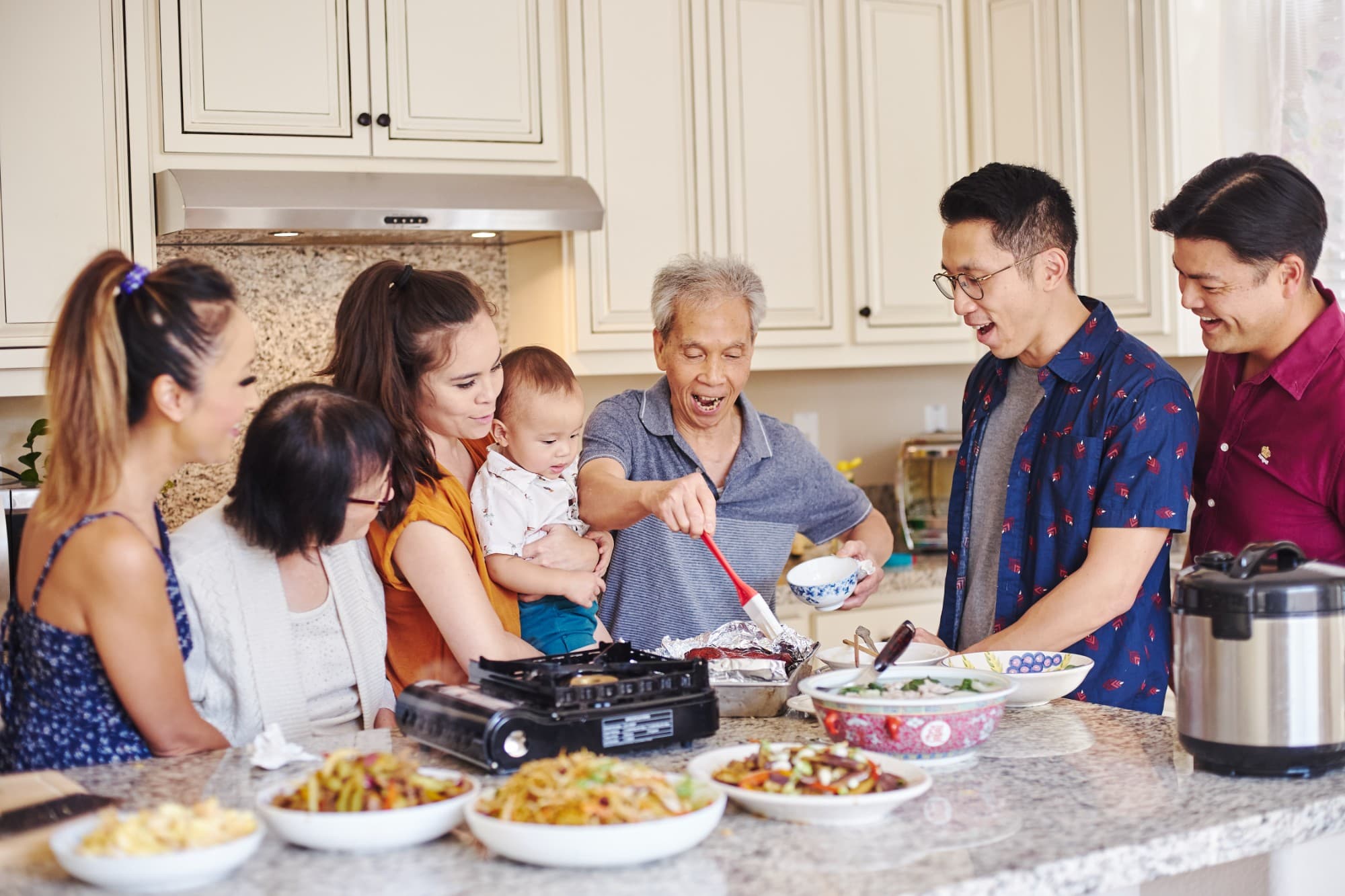
We started Made With Lau to celebrate Cantonese culture and honor the legacy of our wonderful parents, Jenny and Chung Sun Lau.
Our hope is that these recipes and stories help you spread the joy, love, and nostalgia that I felt growing up.
