mwl-logo

Made With Lau

Recipes

Our Family

Courses

Cookbook Newsletter

mwl-logo

Made With Lau

Overview
▶ 0:00
COOK ALONG
madewithlau.com

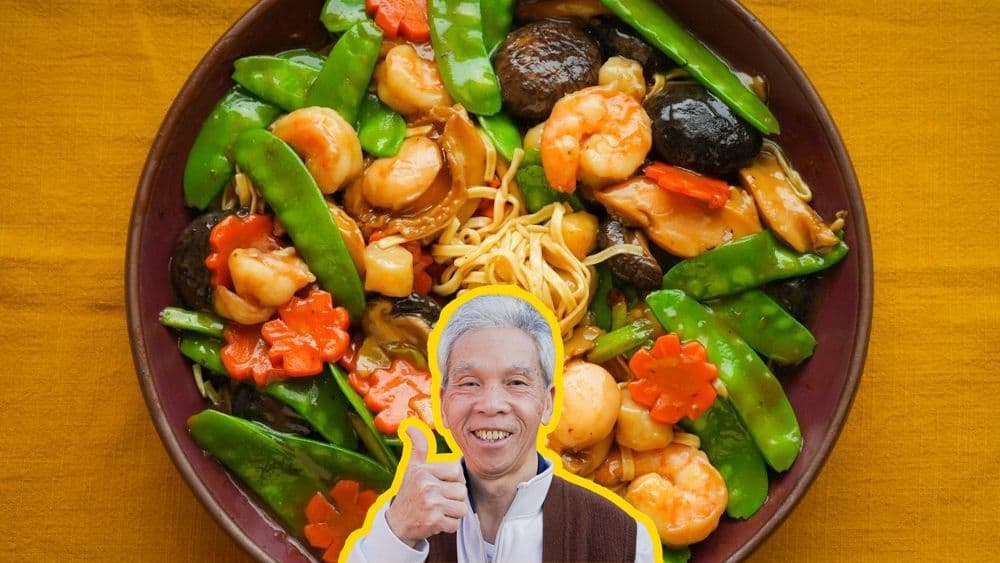
The Longevity Noodles My Dad's Made 100,000X

三鮮伊面
Prep: 25 minCook: 25 minTotal: 50 minServes: 4

Ingredients

Noodles and Seafood
6 ounceyee mein noodles
6 pieceabalone
6 ounceshrimp
5 ouncefresh scallop
1 tablespooncornstarch
Vegetables and Aromatics
5 ouncefresh shiitake mushroom
3 ouncesnow pea
2 ouncecarrot
0.50 ouncegreen onion whites
0.25 ounceginger
2 piecegarlic cloves
Sauce and Seasoning
1.5 cupabalone juice from can
2 tablespoonoyster sauce
2 tablespoonlight soy sauce
2 teaspoonsugar
1 teaspoondark soy sauce
Slurry and Finishing
1 tablespooncornstarch
3 tablespoonwater
1 teaspoonsesame oil
1 teaspoonneutral cooking oil
1 tablespooncooking wine

Instructions

1
Prep vegetables and aromatics

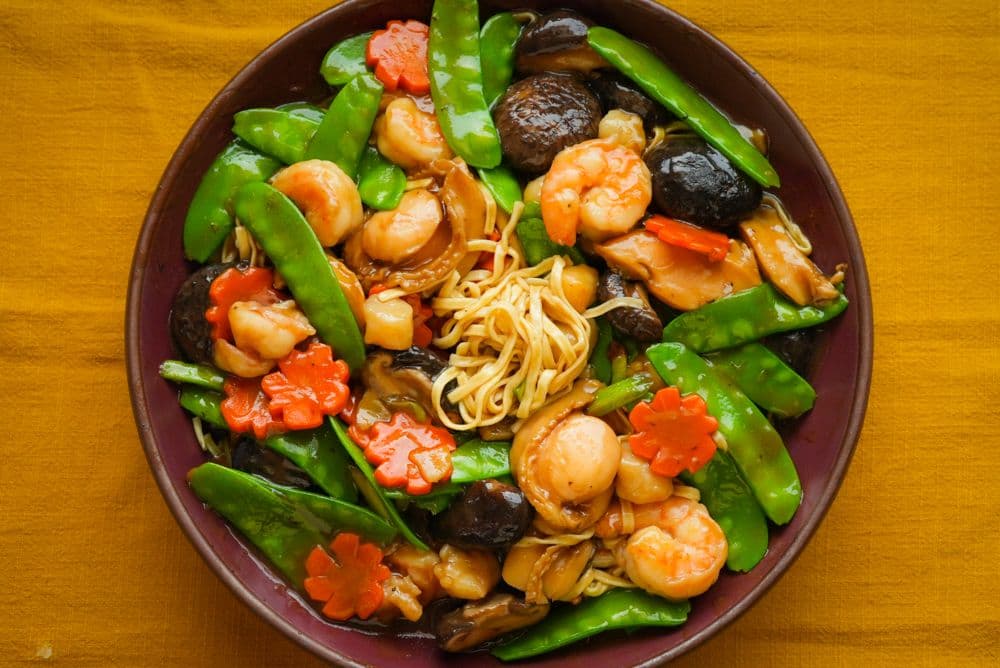
Peel and trim the carrot (2 ounce), then slice into 1/4-inch rounds. If you like, cut them into flower shapes the way my dad does.

Slice the ginger (0.25 ounce), then cut each slice into quarters.

Smash the garlic cloves (2 piece), peel, then slice.

Cut the green onion (0.50 ounce) whites at a diagonal into 1-inch segments.

For the snow peas (3 ounce), snap off the stem end and peel away the string along the side so they stay tender.

For fresh shiitake mushrooms (5 ounce), trim the stems if needed. If the caps are large (over 1–2 inches across), cut them in half on a diagonal so they cook evenly and look nice in the dish.

Fresh shiitakes match the spirit of saam sin yee mein ("three treasures yee mein"): fresh noodles, fresh toppings, fresh flavor. You also don’t have to spend time rehydrating dried mushrooms.

2
Prep shrimp, scallops, and abalone

In separate bowls, mix the shrimp (6 ounce) and scallops (5 ounce) with cornstarch (1 tablespoon) (total for both bowls). Mix gently by hand until each piece is lightly coated. This gives them a soft, tender texture without needing a wet marinade.

Open the can of abalone (6 piece) and save the canned juice in a bowl for the sauce.

If the abalone pieces are large (about 1.5 to 2 inches long), cut most of them into 3–4 diagonal slices along the long axis, about 1/2 inch thick. The diagonal cut gives more surface area for flavor and makes them easier to chew.

My dad likes to leave a few whole abalone pieces intact for a beautiful display in the center of the serving plate.

Some canned abalone are already colored (hung siu jaap) and some are very pale or "clear." The clearer ones need more help from your sauce for both flavor and color.

3
Mix abalone sauce

Pour all the reserved abalone juice (1.5 cup) into a bowl. You should have about 1 1/2 cups total.

Add oyster sauce (2 tablespoon), light soy sauce (2 tablespoon), and sugar (2 teaspoon). Stir until the sugar dissolves and everything is evenly mixed. Optionally, you can add dark soy sauce (1 teaspoon) for a deeper color.

Because the abalone themselves are quite mild and often "clear" in color, this sauce is where most of the flavor and color come from. If your abalone are already dark and richly colored, you don’t need to push the sauce color as much.

In a small bowl, mix cornstarch (1 tablespoon) with water (3 tablespoon) until completely smooth. This is your slurry for thickening the sauce later; you may not need all of it.

4
Blanch vegetables

Bring a pot of water to a rolling boil over high heat. Prepare a bowl of cold water for the snow peas. Using a spider strainer is highly recommended for transferring ingredients.

Add the carrot slices and blanch for about 30 seconds, just until they brighten in color but still have some crunch. Scoop out and drain.

Add the snow peas and blanch for 15–20 seconds, just until they turn a vivid green. Immediately transfer the snow peas to a bowl of cold water so they stay green and crisp.

Add the shiitake mushrooms to the boiling water and blanch for about 1 minute, until they shrink slightly and soften.

5
Blanch yee mein noodles

In the same wok of boiling water, add the yee mein noodles (6 ounce).

Use chopsticks to gently stir and lift the noodles, letting gravity help them loosen and sink evenly so they don’t clump.

Blanch for about 1 1/2 minutes, just until the noodles are slightly softened. They should still be a bit firm because they’ll absorb sauce and cook more later.

Drain well, transfer to a plate, and gently loosen the noodles with chopsticks so they don’t stick together.

Different brands of yee mein vary in size and thickness, so use the 1 1/2 minutes as a guide and adjust slightly based on how quickly they soften.

6
Stir fry scallops and shrimp

Heat a wok on high heat until very hot. Add a generous splash of oil and swirl to coat. Once the oil is just starting to smoke, turn the heat to low or off to avoid burning the aromatics.

Immediately add the ginger and garlic, saving the green onion whites for later. Stir-fry for 20 to 30 seconds in the residual heat until fragrant.

Turn the heat back to high and add the scallops first. Let them sear for 20 to 30 seconds. Add the shrimp. Periodically flip and move the shrimp and scallops, letting them sear on each side on high heat for about 90 seconds until the shrimp turn from grey to orange and the scallops start browning.

You should hear a constant sizzle; adjust the heat so it doesn’t go quiet or burn.

Add a splash of cooking wine (1 tablespoon) around the edge of the wok and toss quickly. This is a subtle trick that amplifies the flavors of the seafood.

Briefly mix with the wine, and scoop the seafood out of the wok.

7
Cook abalone and sauce

With the wok still on high heat, add the sliced abalone, blanched mushrooms, and blanched carrots. Stir-fry together for about 45–60 seconds so the ingredients can sear.

Pour in the 1 1/2 cups of sauce and cover the wok. After covering the wok, bring the sauce to a boil on high heat and let it cook for about 3 minutes in total.

Lower the heat to medium, then add the shrimp, scallops, and green onions and prepare to thicken the sauce.

8
Thicken sauce and finish with snow peas

On medium heat, slowly pour the cornstarch slurry into the center of the wok, over the course of 20 to 30 seconds, while constantly stirring with a spatula with your other hand. Stop pouring if the consistency is thicker than you’d like.

Turn the heat to low or completely off and stir around the wok to combine everything. Add sesame oil (1 teaspoon) for a nutty aroma and cooking oil (1 teaspoon) for a glossy look and slippery mouthfeel.

This is another subtle trick and optional, but my dad is only adding about half of the snow peas to the wok, waiting to add the other half shortly before plating so they’re more vibrant green and crisp.

9
Plate noodles and toppings

Arrange the blanched yee mein on a large serving plate, spreading the noodles out slightly so the sauce can reach everything.

When plating this dish, don’t just pour the entire gravy onto the plate of noodles, instead, like a true banquet chef, intentionally transfer each item onto the dish. My dad makes sure the whole, uncut abalones are square in the middle of the dish and follows with the rest of the ingredients. Using a spatula with a lip helps with sauce transfer as well.

Carefully spoon the abalone, shrimp, scallops, mushrooms, carrots, and snow peas over the noodles, making sure the "treasures" are visible on top.

Recipe by Daddy Lau · 2× James Beard Award Winner · madewithlau.com
Longevity Noodles (三鮮伊面)
Overview
▶ 0:00
COOK ALONG

The Longevity Noodles My Dad's Made 100,000X

三鮮伊面
▶ 93.6K views
👍 3.3K likes
Prep
25 min
Cook
25 min
Total
50 min
Serves
4
Daddy Lau
By Daddy Lau · 2x James Beard Awards · 50+ years
Published Jan 2026

Why this recipe

The story
Longevity Noodles (三鮮伊面) — Daddy Lau
Daddy Lau

Most longevity noodles recipes online are tested only a handful of times. My dad used to make this dish multiple times a day, every day, for 50 years and can make this in his sleep.

I know you'll love it as much as our community does! This recipe has over 93.6K views, 3.3K likes on YouTube.

We are ringing in the Year of the Horse with a symbolic dish worthy of a banquet: Seafood Yee Mein, also known as Longevity Noodles!

Thank you, Kikkoman!

This recipe is brought to you in part by Kikkoman. My dad has been using Kikkoman flavors throughout his 50-year career as a chef, and it's a privilege to get to partner with them on such an iconic recipe, Beef Chow Fun with Gravy!

  • Kikkoman products are a major flavor enhancer and bring out the “umami” taste, and help balance and round out flavors
  • Kikkoman® Less Sodium Soy Sauce is perfect for home cooks who are looking to cut down on their sodium levels, without sacrificing flavor
  • Kikkoman offers a wide range of Gluten-Free Asian sauces, including Gluten-Free Oyster Sauce and Gluten-Free Hoisin Sauce
  • The KikkomanUSA.com Chinese site offers easy Asian recipes that home cooks can enjoy any night of the week

You can learn more about Kikkoman and follow them on social media here:

  • Website: https://www.KikkomanUSA.com​
  • Facebook: https://www.facebook.com/KikkomanChineseUSA (Kikkoman 萬字在美)
  • Instagram: https://www.instagram.com/kikkomanusa_chinese/ (Kikkoman 萬字在美)

Ingredients

Serves4
Noodles and Seafood
6 ounceyee mein noodles
6 pieceabalone
6 ounceshrimp
5 ouncefresh scallop
1 tablespooncornstarch
Vegetables and Aromatics
5 ouncefresh shiitake mushroom
3 ouncesnow pea
2 ouncecarrot
0.50 ouncegreen onion whites
0.25 ounceginger
2 piecegarlic cloves
Sauce and Seasoning
1.5 cupabalone juice from can
2 tablespoonoyster sauce
2 tablespoonlight soy sauce
2 teaspoonsugar
1 teaspoondark soy sauce
Slurry and Finishing
1 tablespooncornstarch
3 tablespoonwater
1 teaspoonsesame oil
1 teaspoonneutral cooking oil
1 tablespooncooking wine
Understanding Flavor
FUNDAMENTALS
Understanding Flavor
Dive Deeper →

Instructions

9 steps · click any step to scrub ↑
1

Prep vegetables and aromatics

Peel and trim the carrot (2 ounce), then slice into 1/4-inch rounds. If you like, cut them into flower shapes the way my dad does.

Slice the ginger (0.25 ounce), then cut each slice into quarters.

Smash the garlic cloves (2 piece), peel, then slice.

Cut the green onion (0.50 ounce) whites at a diagonal into 1-inch segments.

For the snow peas (3 ounce), snap off the stem end and peel away the string along the side so they stay tender.

For fresh shiitake mushrooms (5 ounce), trim the stems if needed. If the caps are large (over 1–2 inches across), cut them in half on a diagonal so they cook evenly and look nice in the dish.

Fresh shiitakes match the spirit of saam sin yee mein ("three treasures yee mein"): fresh noodles, fresh toppings, fresh flavor. You also don’t have to spend time rehydrating dried mushrooms.

The 10 Essential Cutting Techniques
LESSON 3.3
The 10 Essential Cutting Techniques
Dive Deeper →
2

Prep shrimp, scallops, and abalone

In separate bowls, mix the shrimp (6 ounce) and scallops (5 ounce) with cornstarch (1 tablespoon) (total for both bowls). Mix gently by hand until each piece is lightly coated. This gives them a soft, tender texture without needing a wet marinade.

Open the can of abalone (6 piece) and save the canned juice in a bowl for the sauce.

If the abalone pieces are large (about 1.5 to 2 inches long), cut most of them into 3–4 diagonal slices along the long axis, about 1/2 inch thick. The diagonal cut gives more surface area for flavor and makes them easier to chew.

My dad likes to leave a few whole abalone pieces intact for a beautiful display in the center of the serving plate.

Some canned abalone are already colored (hung siu jaap) and some are very pale or "clear." The clearer ones need more help from your sauce for both flavor and color.

3

Mix abalone sauce

Pour all the reserved abalone juice (1.5 cup) into a bowl. You should have about 1 1/2 cups total.

Add oyster sauce (2 tablespoon), light soy sauce (2 tablespoon), and sugar (2 teaspoon). Stir until the sugar dissolves and everything is evenly mixed. Optionally, you can add dark soy sauce (1 teaspoon) for a deeper color.

Because the abalone themselves are quite mild and often "clear" in color, this sauce is where most of the flavor and color come from. If your abalone are already dark and richly colored, you don’t need to push the sauce color as much.

In a small bowl, mix cornstarch (1 tablespoon) with water (3 tablespoon) until completely smooth. This is your slurry for thickening the sauce later; you may not need all of it.

4

Blanch vegetables

Bring a pot of water to a rolling boil over high heat. Prepare a bowl of cold water for the snow peas. Using a spider strainer is highly recommended for transferring ingredients.

Add the carrot slices and blanch for about 30 seconds, just until they brighten in color but still have some crunch. Scoop out and drain.

Add the snow peas and blanch for 15–20 seconds, just until they turn a vivid green. Immediately transfer the snow peas to a bowl of cold water so they stay green and crisp.

Add the shiitake mushrooms to the boiling water and blanch for about 1 minute, until they shrink slightly and soften.

5

Blanch yee mein noodles

In the same wok of boiling water, add the yee mein noodles (6 ounce).

Use chopsticks to gently stir and lift the noodles, letting gravity help them loosen and sink evenly so they don’t clump.

Blanch for about 1 1/2 minutes, just until the noodles are slightly softened. They should still be a bit firm because they’ll absorb sauce and cook more later.

Drain well, transfer to a plate, and gently loosen the noodles with chopsticks so they don’t stick together.

Different brands of yee mein vary in size and thickness, so use the 1 1/2 minutes as a guide and adjust slightly based on how quickly they soften.

6

Stir fry scallops and shrimp

Heat a wok on high heat until very hot. Add a generous splash of oil and swirl to coat. Once the oil is just starting to smoke, turn the heat to low or off to avoid burning the aromatics.

Immediately add the ginger and garlic, saving the green onion whites for later. Stir-fry for 20 to 30 seconds in the residual heat until fragrant.

Turn the heat back to high and add the scallops first. Let them sear for 20 to 30 seconds. Add the shrimp. Periodically flip and move the shrimp and scallops, letting them sear on each side on high heat for about 90 seconds until the shrimp turn from grey to orange and the scallops start browning.

You should hear a constant sizzle; adjust the heat so it doesn’t go quiet or burn.

Add a splash of cooking wine (1 tablespoon) around the edge of the wok and toss quickly. This is a subtle trick that amplifies the flavors of the seafood.

Briefly mix with the wine, and scoop the seafood out of the wok.

7

Cook abalone and sauce

With the wok still on high heat, add the sliced abalone, blanched mushrooms, and blanched carrots. Stir-fry together for about 45–60 seconds so the ingredients can sear.

Pour in the 1 1/2 cups of sauce and cover the wok. After covering the wok, bring the sauce to a boil on high heat and let it cook for about 3 minutes in total.

Lower the heat to medium, then add the shrimp, scallops, and green onions and prepare to thicken the sauce.

8

Thicken sauce and finish with snow peas

On medium heat, slowly pour the cornstarch slurry into the center of the wok, over the course of 20 to 30 seconds, while constantly stirring with a spatula with your other hand. Stop pouring if the consistency is thicker than you’d like.

Turn the heat to low or completely off and stir around the wok to combine everything. Add sesame oil (1 teaspoon) for a nutty aroma and cooking oil (1 teaspoon) for a glossy look and slippery mouthfeel.

This is another subtle trick and optional, but my dad is only adding about half of the snow peas to the wok, waiting to add the other half shortly before plating so they’re more vibrant green and crisp.

9

Plate noodles and toppings

Arrange the blanched yee mein on a large serving plate, spreading the noodles out slightly so the sauce can reach everything.

When plating this dish, don’t just pour the entire gravy onto the plate of noodles, instead, like a true banquet chef, intentionally transfer each item onto the dish. My dad makes sure the whole, uncut abalones are square in the middle of the dish and follows with the rest of the ingredients. Using a spatula with a lip helps with sauce transfer as well.

Carefully spoon the abalone, shrimp, scallops, mushrooms, carrots, and snow peas over the noodles, making sure the "treasures" are visible on top.

Pairs well with

View all →
25 min

Ginger Scallion Spaghetti (薑蔥撈麵)

View recipe →
60 min

Plant-Based Meal (植物性餐點)

View recipe →
15 min

Chow Mein, with Instant Noodles (泡麵版炒麵)

View recipe →

Made with love ❤️

The Lau Family

We started Made With Lau to celebrate Cantonese culture and honor the legacy of our wonderful parents, Jenny and Chung Sun Lau.

Our hope is that these recipes and stories help you spread the joy, love, and nostalgia that I felt growing up.

mwl-logoMade With Lau

A family-run Cantonese cooking project from Daddy Lau, Randy Lau, and a small team in the Bay Area.

Recipes
All recipesEasy weeknightsTakeout favoritesSoups & brothsDim sumNoodles
Learn
Mini masterclassesAll courses
About
Our familyCookbook (2027)ContactPrivacy
Made with ♥ in the Bay · © 2026 · Year of the Horse
YouTube · 1.78MInstagram · 412KTikTok · 891K