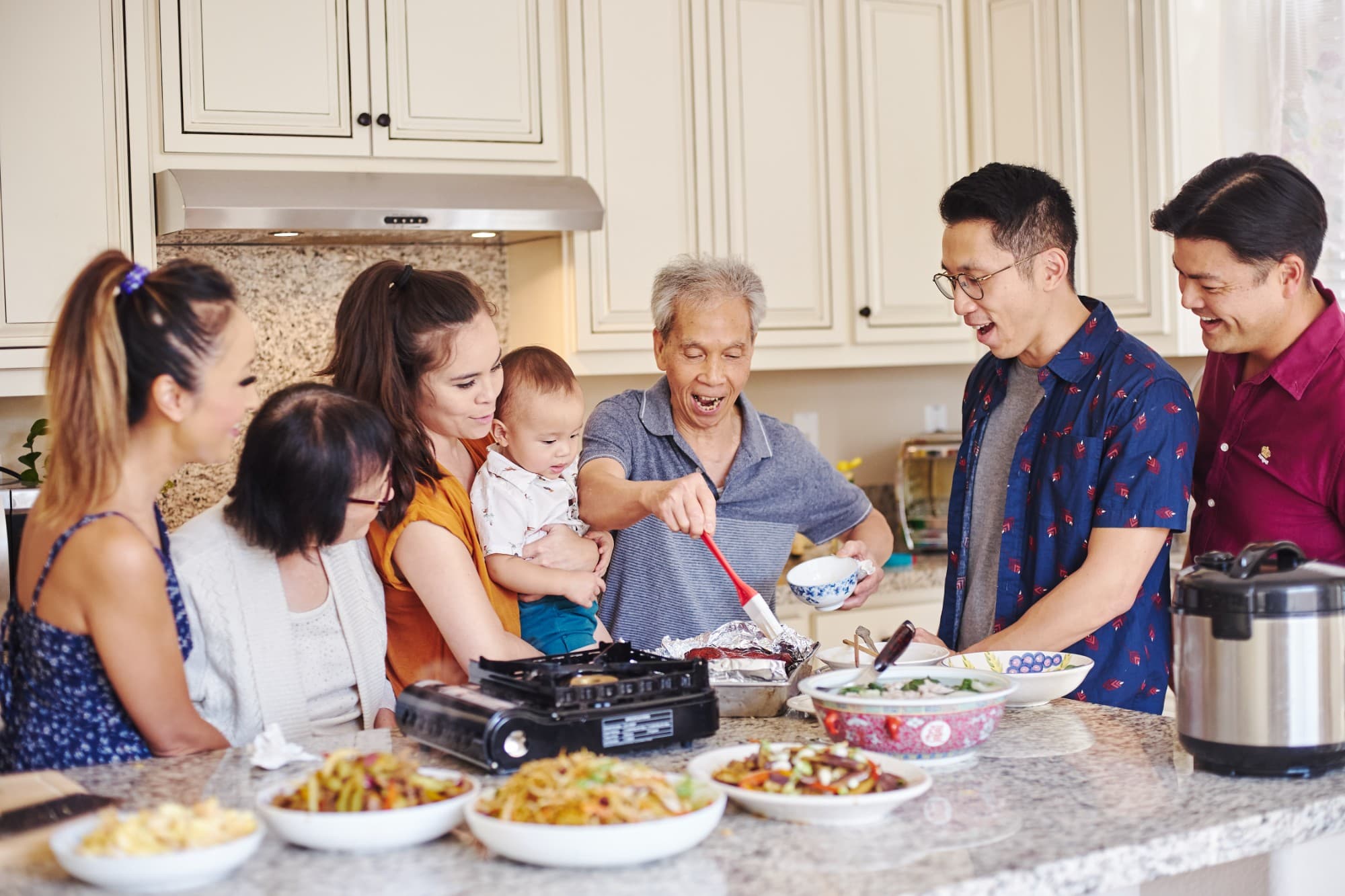
Why should you try my dad's recipe?

Because my dad's made this dish thousands of times (literally!) over his 50+ year career as a Chinese chef. And now, you get to learn all of his tips and techniques.
I know you'll love it as much as our community does - this recipe video has over 696K views and 11.3K likes on YouTube!
Love from our community
@Yegorific
This is a Chinese interpretation of Borscht, so do whatever you like. But European Borscht relies on garlic for the "kick", and fermented beats or fermented cabbage for the sour notes. The characteristic red color is from red beats, fermented or not (and these must not be over-cooked). Ginger is typically not used, and Chilies are optional/traditionally unavailable. Borscht is mostly about meaty and sour flavors with lots of fat, but at heart it's a peasant dish. Traditional Slavic type soups use fried vegetables, mostly onions carrots an cabbages, for color and specific flavor. Ideally, use three or more different meat products, including something smoked, and some form of pork. Leftover meat can, and often is used for this dish. Fish and sea-food are relegated to Ukha (another type of soup). Borscht is better the next day, or at least several hours after cooking. It's served hot, with black rye bread on the side, and a spoon full of sour cream added at the table (to individual preference). Garnish with fresh chopped dill and/or parsley. The soup should be filling, with lots of broth but also bite-sized pieces of meat and vegetables that you can chew. You can add beans or other legumes, cereal grains, noodles, dumplings, psudo-cereals like buckwheat, mushrooms, and just about anything else and it still qualifies as Borscht. The point is to explain the sort of dish you're reinterpreting. We didn't have regular access to a lot of spices and tropical ingredients, so our dishes rely heavily on the freshness and quality of the ingredients, and often have a fairly mild sour-and-meaty flavor profile. In terms of Ukrainian food (which Borscht is typically considered to be), Pork and Pork Fat features heavily. Our method typically fries the onions until golden, or at least translucent. Then add carrots, beats, and (if it's not fermented) cabbage (all shredded or cut finely). These vegetables often get covered with a lid to steam in the skillet. The potatoes get boiled from a raw state. Garlic may be toasted in the pan, or crushed in raw, and is sometimes added into individual bowls for extra spice. Fermented cabbage (also shredded) is often added at the very end of cooking, since it's already softened. Russian/Soviet style fermented cabbage often includes some shredded carrots and sometimes apples. Apples also make an interesting addition to borscht, though they're not required. In terms of cooking the meat, we normally also skim off the coagulating proteins, but they're both safe to eat and don't really effect the taste very much. The broth from the meat is always left in the soup. This is primarily because pre-made broth was not normally available in the USSR or Imperial Russia. So meat was often boiled first (sometimes with bones), then the meat removed temporarily and possibly sliced into bite-sized pieces, while the broth was used to cook the vegetables, and the meat reintroduced at the end of the cooking process. Tomatoes, if used, are typically not fried first but Tomato paste is often added to the skillet with the vegetables to add tartness and help caramelize the onions. During the Soviet period, government technologists spent considerable effort and resources to modernize and re-engineer the food industry and public nutrition. This included re-working traditional dishes like borscht, to maximize nutritional value. But most ingredients remained difficult to source reliably because of logistical problems and production miscalculations. After the 50's Soviet citizens consumed a similar number of calories as their Western counterparts, but specific ingredients were often in short supply. Recipes often listed a quantity of "meat", without specifying the animal or the cut. It was common knowledge that some types of meat worked better than others, and there were definite regional/cultural preferences and some meats that weren't eaten except in survival situations. But listing a particular cut or sometimes a particular animal was pointless because it might not be available. Likewise, fruits and vegetables were often seasonal, and people made their own preserves in the fall, for the winter ahead. The State also produced preserves in mass, but home-made stuff was often considered better quality, and the supply at government stores could never be counted on for specific products. This was interesting.
@divacute9369
Also.. im a practising muslim and when I was i. The US, one of my chinese muslim friend's dad made this for us. He used lamb shanks.. it qas so so good. Im definitely making this. Thank you for the recipe
@hoyenko
Not really russian, it's a Ukranian dish. It's interesting how it got adopted and the biggest change is that it lost the beets - one of the most important part that makes it red. Russians make a soup called Schee - similar to borstch but without the beets. I love bortstch becaus of it's versatility - you could substitute some ingredients, some people add things like beans, some would not use meat at all, when you don't have one of the things you can still make it. It;s an awesome soup. In Ukraine you don't even call borscht a soup - it's a separate dish.
Watch on YouTube
Meet your chef, Daddy Lau

50+ Years of Experience
My dad's been cooking Chinese food for over 50+ years, as a chef, restaurant owner, and loving father.
Meet our family

2x James Beard Awards
We won TWO James Beard Awards for our endeavors in teaching and preserving Cantonese cuisine.
Read more

Over 2.5M+ Followers
My dad is the internet's favorite Chinese chef, teaching millions of people how to cook every month.
Watch our videos
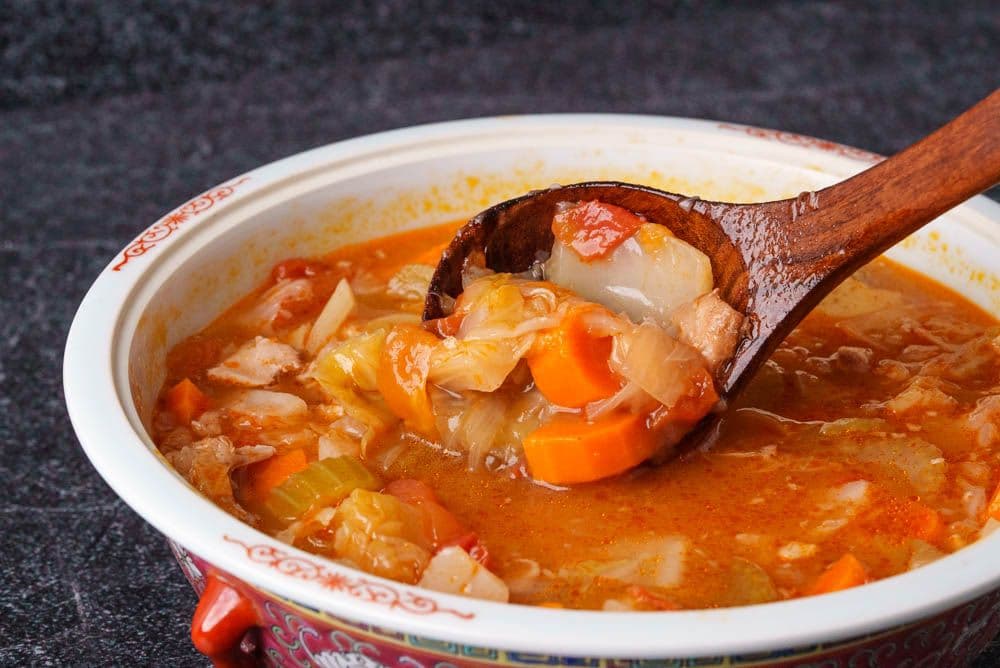
Cantonese Borscht Soup (羅宋湯)

Cantonese borscht, or Hong Kong borscht, is a staple of Hong Kong cafés. It's a hearty tomato soup that's commonly served as a side dish to café entrees.
But isn't borscht a Eastern European dish? That's right! You may be familiar with this soup as a brightly colored beet vegetable soup.
Russian immigrants brought this part of their heritage with them to China in the early 20th century, where in true immigrant fashion, they adapted the recipe to local ingredients. Over time, the soup traveled south to Hong Kong and became a signature item of Hong Kong's Western menu.
Ingredients
Prep
30 minutes
Total
150 minutes
Share
Use our magic wand to update this recipe!
Main Ingredients
- 1 lb spare ribs
- 1 lb green cabbage
- 2 potato
- 2 carrot
- 4 tomato
- 3 stalk celery
- 1 red onion
- 0.50 chili pepper (use more or less to your taste)
- 2 oz ginger
- 3 clove garlic
- 0.50 lemon
- 2 tbsp corn oil
- 2 bay leaf
Seasoning
- 0.25 tsp black pepper
- 5 tbsp ketchup
- 14 fl oz chicken broth
- 9 cup water
- 1 tsp salt
- 2 tbsp sugar
Want a deeper dive into how to craft traditional, authentic Cantonese flavors?
Understanding Flavor
Learn how to recreate the Cantonese flavors you love by demystifying and mastering a handful of core, traditional ingredients
No beets, hold the sour cream
Arguably the most well-known version of borscht is a strikingly red Eastern European soup, colored by beets and served with a hearty dollop of sour cream. Those two distinctive ingredients are noticeably missing from our Cantonese version.
Cantonese borscht doesn't have beets, and is instead known for its tomato base. It's also not served with sour cream, but as we always say, your house, your rules! If you end up adding sour cream to this version, let us know how it goes.
Instructions
Prep
30 minutes
Total
150 minutes
Share
Use our magic wand to update
this recipe!
Help Shape Our Cookbook!
We're writing a cookbook! It won't be available until 2027, but sign up now to get weekly tips and videos from our cookbook development.
Step 1: Prepare vegetables
Because all these vegetables will be boiling in soup for two hours, it's not necessary to obsess over the exact size and shape of each vegetable. However, it's ideal to cut everything to approximately the same size. Your soup will look amazing and the ingredients will have the perfect textures.
Cut the green cabbage (1 lb) open. Cut the hard core away and discard it. Cut the cabbage into thick strips, then into bite-sized pieces.
Trim and discard the dirty ends of the celery (3 stalk). Break the stalks by hand to see the tough, stringy fibers along the outer, greener surface of celery stalks. They can be difficult to eat and digest, so pull off any stringy fibers that stick out. Then, dice the celery into small, bite-sized chunks.
Peel the potatoes and carrots if you like. You'll also be dicing these. For the potato, wet your knife to prevent sticking, then cut the potatoes in halves, then quarters, then into large cubes. Cut the thickest ends of carrots in half lengthwise, then into bite-sized chunks. (If you have skinny carrots, you might not need to halve them.)
Cut the red onion open so you can stabilize it on its cut, flat base. Then cut across once to halve again, and dice into chunks.
Cut the chili pepper open. Discard the seeds and core to reduce the spice level, or include them (or add more chili pepper!) for more of a kick. Chop the pepper into small pieces.
Cut the tomatoes in half, then into quarters, then into large bite-sized pieces. Dice the last tomato into smaller pieces. The large chunks provide texture, and the smaller pieces will melt into the broth for more flavor.
Smash the ginger (2 oz) and roughly cut it into small pieces. Smash the garlic (3 clove). To make it easier to fish out when eating, leave these aromatics in smashed chunks.
Cut the lemon in half.
Step 2: Parboil spare ribs
Add the spare ribs (1 lb) to a wok or pot full of clean, cold water. For 1 lb of spare ribs, we needed 4-5 cups of water to submerge them. Turn the heat to high and bring it to a boil.
Once it comes to a boil, lower the heat. You'll see foamy scum and debris rise to the surface. Let it simmer for 30 seconds. While the spare ribs parboil, prepare a bowl of cold water.
Scoop the parboiled spare ribs out and put them in the cold water. Use your hands to scrub and rinse off any debris from the spare ribs.
Pour out the scummy water and quickly clean the wok or pot.
Step 3: Stir-fry ingredients
(Time-management tip: on the side, you may want to start boiling water (9 cup) for the next step.)
Dry your wok if needed, then set the heat to low. Add corn oil (2 tbsp) to the wok. Add the ginger and garlic. Stir-fry these aromatics on low heat until they're fragrant, which should take 15-20 seconds.
Add the onions and stir-fry for 20 seconds.
Add the smaller, diced tomatoes and cook for about 30 seconds.
Add the potatoes and carrots. The moisture of the tomatoes will help keep the other ingredients from burning now, so turn the heat up to medium or high. The high heat will help cook off the liquid so the ingredients can stir-fry rather than steam in their own moisture. Stir-fry for about 30 seconds.
Add the rest of the tomatoes and the chopped chili peppers. Stir-fry for about 30 seconds, then add the celery.
Add ketchup (5 tbsp) and mix it in.
Add the parboiled spare ribs. Season with black pepper (0.25 tsp) and stir it in.
Turn the heat off to safely transfer all the ingredients into a large soup pot.
Step 4: Cook soup in pot
To the soup pot full of stir-fried ingredients, add chicken broth (14 fl oz). Then turn the heat on to high. Add water (9 cup) (use boiling water to save time), then give everything a good stir to ensure that everything is well-mixed.
Add the cabbage, bay leaves, and lemon.
Bring everything to a boil. Put the lid on the pot to speed up the process. Once it's boiling, turn the heat down to medium-low and uncover the pot to give it a mix. Then, put the lid back on and let it simmer for 2 hours.
After 2 hours, the soup is cooked through and all the vegetables should be soft. Season with salt (1 tsp) and sugar (2 tbsp). Have a quick taste and adjust the seasoning to your liking.
Enjoy! This soup tastes great fresh, but its flavor will deepen and get even richer after a day or two in the fridge.

Master Cantonese cooking from the ground up
Develop the intuition and foundation to cook Cantonese food with exclusive classes from a master chef.
Explore all masterclassesFrequently Asked Questions
Enjoy!
We have many, many happy memories of enjoying this dish growing up.
Now, hopefully, you can create your own memories with this dish with your loved ones.
Also, I cordially invite you to eat with us and learn more about the dish, Chinese culture, and my family.
Cheers, and thanks for cooking with us!
Feel free to comment below if you have any questions about the recipe.
More Recipes

泡麵版炒麵
Chow Mein, with Instant Noodles

萬用炒醬
Universal Stir Fry Sauce

牛肉炒飯
Beef Fried Rice

雞湯
Easy Chicken Broth