
The Braised E-Fu Noodles My Dad's Made 100,000 Times

Why this recipe

Most braised e-fu noodles recipes online are tested only a handful of times. My dad used to make this dish multiple times a day, every day, for 60+ years and can make this in his sleep.
I know you'll love it as much as our community does! This recipe has over 115.6K views, 2.3K likes on YouTube.
E-fu noodles, or yee mein, is a recurring delicacy at Chinese banquets and special events. The delicious sauce and delightful spongy, chewy texture hide just how simple the dish actually is! You can't tell that it takes minutes to put this together.
What is "E-fu"?
This noodle has a few origin legends, but the most popular one is that these noodles were named after Yi Bingshou, a Chinese government official who was famous for his calligraphy.
One day, Yi Bingshou was entertaining large number of guests, and his cook was rushing to get food to the guests. The cook accidentally took cooked egg noodles and fried them.
Instead of starting over and making new noodles, he dunked the fried noodles in stock and served them. It was an instant hit, and it is said that those noodles back then tasted similarly to present-day instant noodles.
"E" is another way of writing "Yi", from Yi Bingshou, and "fu" is a word meaning household. So "E-fu noodles" means "noodles from the house of Yi". So fancy!
Pairs well with
View all →
Ingredients

Alternatives to Yee Mein noodles
Because of the unique texture of Yee Mein/E-fu noodles, it's difficult to perfectly recreate Yee Mein dishes with a substitute noodle. Yee Mein is soft and spongy, so it's easy to chew, and it soaks up sauce really well.
Of course, you can still make Yee Mein recipes with other noodles! They will probably be a little firmer and the sauce will lay over the noodles instead of soaking all the way in.
Cooking yellow chives
In this recipe, we add the yellow chives after we've finishing cooking everything else and the heat is off. This helps preserve the delicate flavor of the yellow chives.
The residual heat of the noodles will be exactly enough to cook the yellow chives just the right amount.
Instructions
Prepare ingredients

We rehydrated the dried shiitake mushrooms ahead of time, so make sure that they've soaked in warm water for half an hour to an hour before you're ready to start. Also, you can start heating the water that you'll need for the next step.
We'll cut all the vegetables into about the same size and shape, so that they're relatively uniform in the final dish.
Cut the yellow chives (1 bunch) into 1 inch lengths.
Cut the rehydrated shiitake mushrooms into thin strips.
Cut the king oyster mushroom into thin slices, and then thin strips.
Cut the carrot (1 medium) into thin slices, and then thin strips as well.
You can stabilize the carrot by making one slice along the side, and then setting it onto your cutting board with that cut side down, and it won't roll around as much. Then it'll be safer to cut.
Finally, peel, smash, and mince garlic (1 clove).

Cook noodles
The more boiling water you use in this step, the faster the noodles will cook without soaking up as much water, which is ideal for avoiding soggy noodles.
Pour boiling water, enough to submerge the noodles, into a deep, wide wok that's big enough so that it can fit all the noodles you're cooking, with the stove on high heat. Using boiling water to start helps cut down on the time you spend standing over the stove.
Make sure that the water is at a boil, and put the yee mein noodles (1 lb) in. It'll take about 2 minutes for the noodles to soften and completely loosen up, at which point you can take them out of the wok and let them drain in a colander or strainer.
If you're not going to proceed with stir-frying right away, shock the noodles in cold running water to stop them from cooking further with their own residual heat.
Stir-fry vegetables
Pour the water out from the wok, and dry it to prepare for stir-frying.
Heat the wok on high for 15-30 seconds, then add oil (1 tbsp). Let it heat the oil for 30-40 seconds, then add the minced garlic and fry for about 10 seconds, so that it's fragrant.
Add the sliced shiitake mushrooms and the sliced king oyster mushrooms, cook for 10 seconds, and then the sliced carrots. Continue cooking for 40-50 seconds.
Add boiling water (0.50 cup) and let the ingredients boil for about a minute.
Add seasoning
Turn off the heat briefly so that we can add our seasonings.
Add vegetarian oyster sauce (2 tsp), light soy sauce (1 tsp), dark soy sauce (1 tsp), sugar (1 tsp), and salt (0.50 tsp).
Mix them in, and have a taste. It'll be easiest to make any adjustments to flavor here while the sauce is still rather brothy, because the noodles are going in next and they'll be soaking up all the sauce. You can continue adjusting the taste later, but it may not be as evenly distributed as adjustments made now.
Add noodles
Add the noodles after the sauce is to your liking, and mix them in. Keep mixing so that the noodles can evenly absorb all of the sauce.
Continue cooking on high heat until the liquid has cooked out, which will take about 2.5 to 3 minutes. When it's ready, the noodles will be saucy, without a pool of liquid at the bottom.
Add sesame oil & yellow chives
Turn the heat down to medium, and add sesame oil (1 tsp) and oil (1 tsp) for that nutty, roasted taste and shine. Then turn the heat off and add the chopped yellow chives.
The residual heat of the noodles is enough to cook the yellow chives while keeping their delicate, aromatic flavor.
Taste test & plate
Taste to adjust the flavors and plate once it's to your taste! This is usually served in a large serving bowl or plate and everyone can take the amount they want.
Made with love ❤️
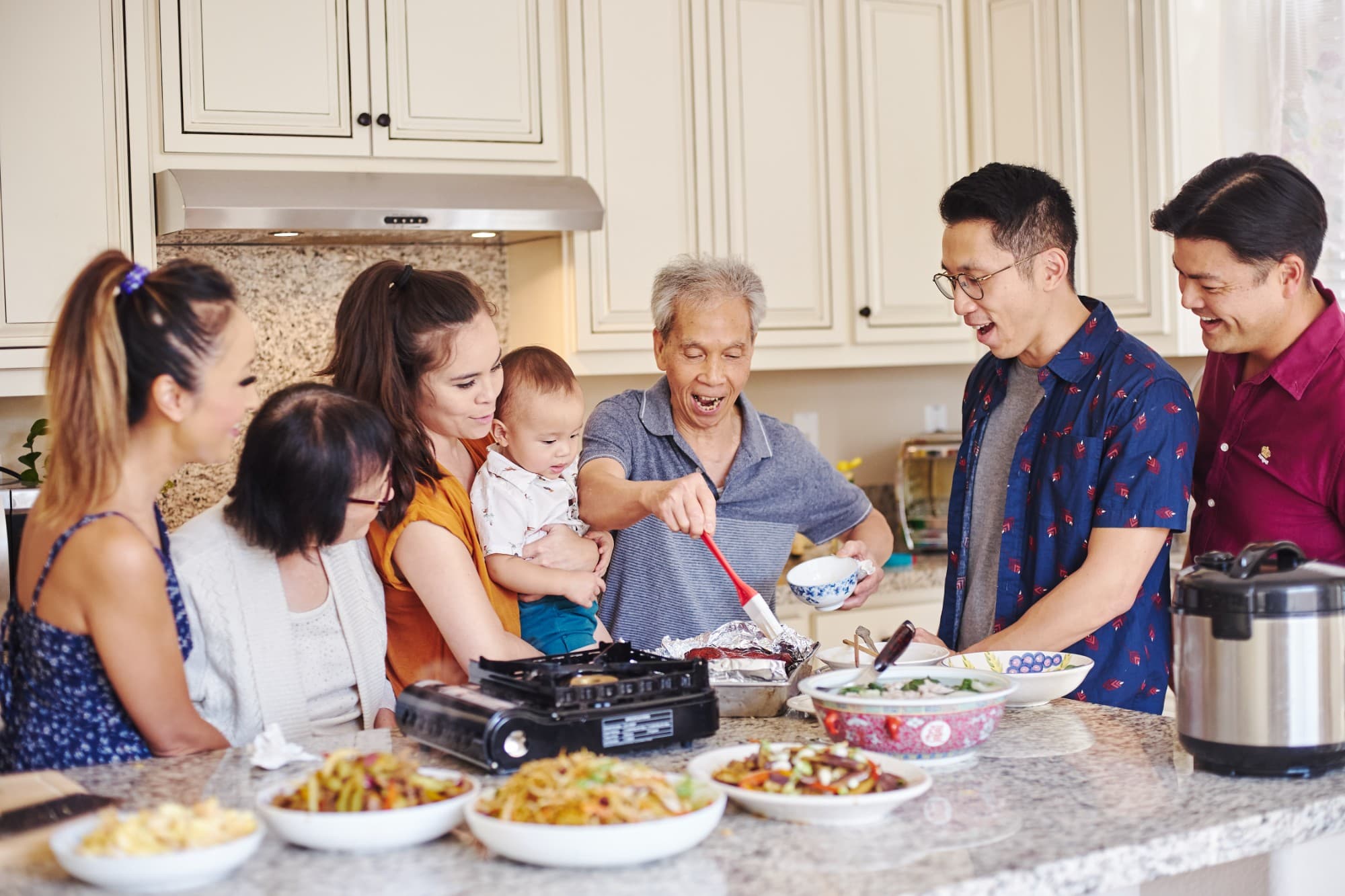
We started Made With Lau to celebrate Cantonese culture and honor the legacy of our wonderful parents, Jenny and Chung Sun Lau.
Our hope is that these recipes and stories help you spread the joy, love, and nostalgia that I felt growing up.
